
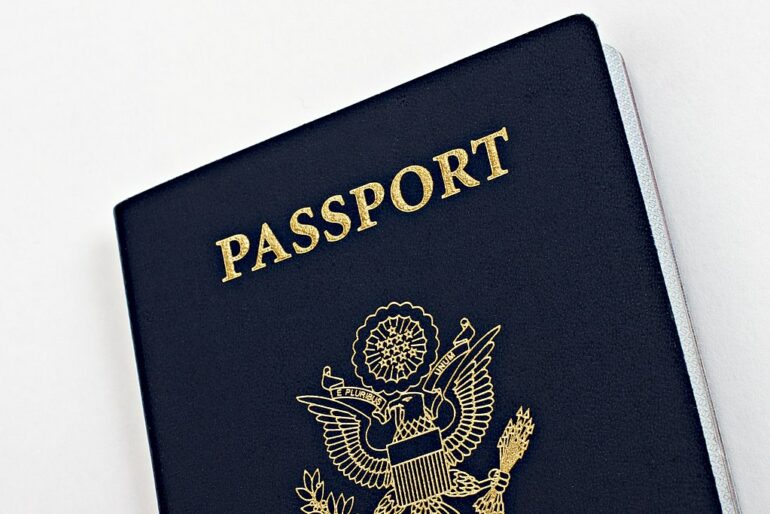

The State Department announced Thursday that it will begin revoking passports for Americans who owe significant amounts in unpaid child support, signaling a renewed push to enforce a long-standing but rarely used law aimed at ensuring financial responsibility to families.
Under current rules, individuals who owe more than $2,500 in child support are already ineligible to receive a U.S. passport. Now, federal officials say they will take the additional step of revoking existing passports for those who remain delinquent, a measure authorized under legislation signed in 1996 but not widely enforced until now.
“Any American with significant child support debt should arrange payment to the relevant state or states now to prevent passport revocation,” the State Department said in a statement, urging those affected to act quickly before facing travel restrictions.
The department emphasized that once a passport is revoked, it cannot be used for international travel. Eligibility for a new passport would only be restored after the individual pays off the outstanding debt and is no longer listed as delinquent in records maintained by the Department of Health and Human Services.
While officials did not provide a firm start date, The Associated Press reported that enforcement could begin as early as Friday, initially targeting individuals who owe $100,000 or more in child support. The scope of the program remains unclear, as the State Department has not yet disclosed how many Americans could ultimately be affected.
The effort will be carried out in coordination with the Department of Health and Human Services, which will supply data on individuals who have missed payments exceeding the $2,500 threshold. By working across agencies, officials say they hope to strengthen accountability and ensure that children receive the financial support they are owed.
The legal authority for the move dates back to 1996, when then-President Bill Clinton signed the Personal Responsibility and Work Opportunity Act into law. The statute grants the secretary of State the ability to deny, revoke, or limit passports for individuals with significant child support arrears, though enforcement has historically been inconsistent.
Assistant Secretary of State for Consular Affairs Mora Namdar framed the renewed effort as a practical step toward improving compliance. “We are expanding a commonsense practice that has been proven effective at getting those who owe child support to pay their debt,” she said in a social media statement.

Namdar added that the initiative reflects coordination across federal agencies, noting that under the leadership of President Donald Trump and Secretary of State Marco Rubio, officials are working to ensure children receive the support they need. She emphasized that once debts are resolved, individuals will be able to regain access to their passports.
The policy underscores a broader principle that has long enjoyed bipartisan backing: that parents should meet their obligations to their children. At the same time, it raises questions about how aggressively the federal government should enforce such measures, particularly when they intersect with personal mobility and international travel.
For now, the message from Washington is clear. Those with outstanding child support debts are being given notice: settle accounts or risk losing the privilege of a U.S. passport.
[READ MORE: Court Blocks Trump Tariffs, Raising Questions About Executive Power and Economic Strategy]