
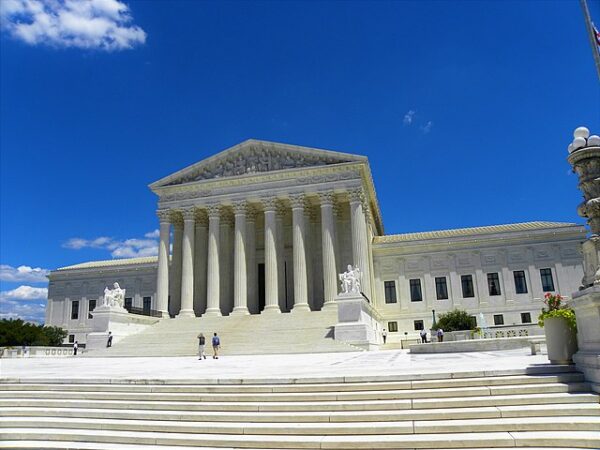

President Donald Trump on Sunday issued a pointed and unusually personal rebuke of two members of the Supreme Court, Justices Amy Coney Barrett and Neil Gorsuch, criticizing their role in a ruling that struck down his administration’s tariff policy earlier this year.
In a lengthy post on Truth Social, Trump expressed frustration that the two justices—both of whom he appointed—joined a 6-3 decision in February rejecting his attempt to use an emergency statute to justify increased trade rates. The president argued that the ruling has had sweeping financial consequences for the country.
“They were appointed by me, and yet have hurt our Country so badly!” Trump wrote, adding that while he does not believe their intentions were malicious, the outcome of the decision has been costly. According to Trump, the ruling has forced the United States to repay $159 billion to foreign entities, companies, and countries he claims have long taken advantage of American trade policies.
“It’s hardly believable!” he added, underscoring his disbelief at both the decision itself and its aftermath.
The Supreme Court’s ruling had already drawn a sharp response from Trump at the time it was issued, but Sunday’s message marked a more expansive critique. In particular, the president questioned why the court required the government to refund all funds collected under the tariffs. The issue has since grown in scale, with Customs and Border Protection identifying more than 330,000 importers who paid the duties and may now be eligible for refunds.
Last month, Trump signaled that he would be keeping track of which companies choose not to pursue those refunds, suggesting that their decisions could carry weight in the future.
In his latest remarks, the president framed the situation as part of a broader struggle to implement his economic agenda. “I’m working so hard to, MAKE AMERICA GREAT AGAIN,” Trump wrote, before questioning why individuals he elevated to high office would rule in ways he sees as harmful to the nation.
At the same time, Trump suggested that a degree of loyalty from appointees would not be unreasonable, given the significance of their appointments. He stopped short of directly accusing the justices of wrongdoing but made clear his dissatisfaction with their judgment.

The president concluded his post by turning to another major legal battle looming before the court: his executive order repealing birthright citizenship. Trump urged the justices not to strike it down, warning that another adverse ruling could compound what he described as an already precarious economic situation.
“Well, maybe Neil, and Amy, just had a really bad day,” Trump wrote, striking a somewhat measured note amid his criticism. Still, he cautioned that decisions of such magnitude carry lasting consequences for the country.
“A negative ruling on Birthright Citizenship, on top of the recent Supreme Court Tariff catastrophe, is not economically sustainable for the United States of America,” he said.
While Trump’s remarks highlight ongoing tensions between the executive branch and the judiciary, they also reflect a deeper concern about the long-term impact of sweeping policy decisions—particularly those tied to economic and global disputes that can reverberate far beyond the courtroom.