
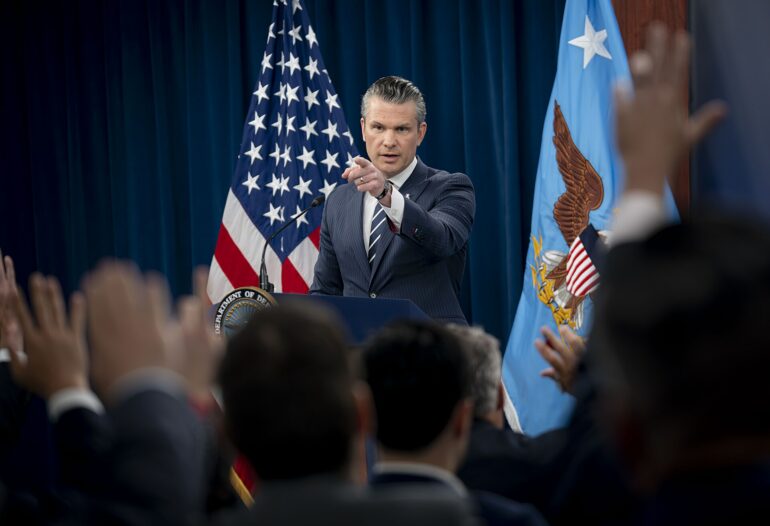

Secretary of War Pete Hegseth on Sunday accused Sen. Mark Kelly (D-AZ) of improperly discussing sensitive information from a classified Pentagon briefing during a national television appearance, raising questions about whether the Arizona lawmaker crossed a legal line.
In a sharply worded post on X, Hegseth did not hold back. Referring to Kelly’s military background, he wrote, “‘Captain’ Mark Kelly strikes again,” before accusing the senator of “babbling on TV (falsely & dumbly)” about a classified briefing he had received. Hegseth went further, suggesting the matter could carry legal implications.
“Did he violate his oath…again?” Hegseth asked, adding that the Department of War’s legal counsel would review the situation.
The controversy stems from an interview Kelly gave earlier Sunday on Face the Nation with moderator Margaret Brennan. According to Brennan, Kelly referenced a classified Pentagon briefing related to the ongoing Iran war, specifically discussing its impact on U.S. weapons stockpiles. She highlighted his remark that it was “shocking how deep we have gone into these magazines,” suggesting a significant drawdown of munitions.
However, Brennan’s summary of the interview left out a key portion of Kelly’s comments. Immediately after discussing the briefing, Kelly criticized President Donald Trump, saying the administration had entered the conflict without a clear strategic goal, plan, or timeline.
Brennan did note additional details Kelly provided, including his claim that several major weapons systems—Tomahawk missiles, ATACMS, SM-3 interceptors, THAAD rounds, and Patriot missiles—had been “hit hard.” She also relayed his warning that replenishing U.S. stockpiles could take years.
Kelly’s broader message struck a cautionary tone about national security. “The American people are less safe,” he said during the interview, arguing that depleted munitions could leave the United States vulnerable in other potential conflicts, including in the Western Pacific or elsewhere. He also questioned what tangible benefit the country is receiving from its involvement in the Iran war.
Hegseth’s response underscores a different concern—whether public discussion of such matters, especially if tied to classified briefings, risks exposing sensitive information. His call for a legal review signals that the administration is taking the issue seriously, particularly when it involves a sitting senator with access to high-level intelligence.
This is not the first clash between Hegseth and Kelly. The two have sparred publicly in the past, including last fall when Hegseth accused Kelly of “seditious” behavior after the senator and several other Democrats released a video urging troops to refuse illegal orders.
The latest dispute reflects a broader tension that often emerges during times of military conflict: balancing transparency with operational security, and political debate with the realities of war. While officials argue over what should or should not be said publicly, the underlying issue remains the same—how far the United States should go in a conflict that carries both strategic risks and long-term costs.
As questions swirl over depleted stockpiles and the direction of the Iran war, the exchange between Hegseth and Kelly highlights a deeper unease about decisions made in Washington—and their consequences for both national security and the men and women expected to carry them out.
[READ MORE: State Department Moves to Revoke Passports Over Unpaid Child Support]