
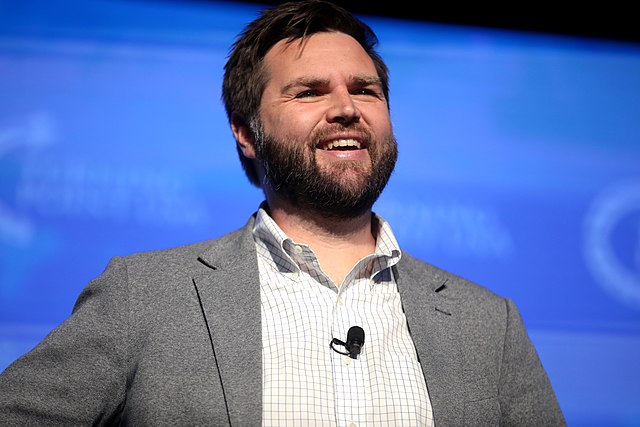

Vice President JD Vance said Monday that negotiations with Iran have reached an important early milestone, highlighting what he described as a significant breakthrough on nuclear oversight while emphasizing that substantial work remains before any final agreement can be reached.
Speaking at a news conference from the summit in Switzerland, Vance announced that Iran has agreed to allow inspectors from the International Atomic Energy Agency (IAEA), the United Nations-affiliated nuclear watchdog, to return to the country. He characterized the move as one of the most encouraging developments to emerge from the talks so far.
“This is probably what we’re most excited about as Americans,” Vance said. “The Iranians have agreed to invite IAEA inspectors back into their country. That is a major milestone for the American people, and the first step in permanently denuclearizing or permanently ending a nuclear weapons program in Iran. And that’s exactly what we wanted to do. That’s exactly what we asked to happen.”
The vice president framed the development as evidence that the negotiations are moving in a productive direction, arguing that increased inspection access is a critical component of addressing concerns surrounding Iran’s nuclear activities.
Vance also offered an optimistic assessment of the opening round of talks, describing Sunday — the first day of negotiations in Switzerland — as “a very, very good day” for the United States.
According to Vance, negotiators made progress on several key issues beyond the nuclear file. He said the two sides established a mechanism aimed at keeping the Strait of Hormuz open, a strategically important waterway that plays a major role in global shipping and energy transportation.
In addition, Vance said discussions addressed details regarding potential violations of the ceasefire between Israel and Hezbollah. While he did not elaborate extensively on those conversations, he suggested that negotiators worked through some of the practical questions surrounding how future breaches could be handled.
Even as he highlighted those developments, Vance stressed that the negotiations remain incomplete and that no final agreement has yet been reached.
“The way that I think about it is very simple,” Vance said. “We laid a very good foundation for a successful final deal. The final deal is the house. We set the foundation. We haven’t built the house.”
The vice president used the analogy to caution against viewing the initial progress as the end of the process. Instead, he argued that the talks have established a framework that could eventually lead to a broader agreement if both sides continue working through unresolved issues.

“We’ve laid a successful foundation to get to a good place for the American people,” Vance continued. “I think it’s important for all of us to appreciate how much was done, but honestly there is still a lot to do.”
Vance pointed specifically to ongoing nuclear and economic discussions as areas where negotiators still need to make progress. He also referenced continued efforts to de-mine the straits and restore normal maritime traffic.
While supporters of diplomacy point to the renewed inspections and other early breakthroughs as encouraging signs, Vance himself emphasized a measured approach. Significant progress may have been made, he argued, but the harder task of turning those gains into a lasting agreement still lies ahead.
For now, the administration is presenting the talks as a promising start — one focused on verification, stability, and avoiding further escalation, while acknowledging that the road to a final deal remains unfinished.
[READ MORE: White House Fires Back at Batya Ungar-Sargon as Debate Over Trump’s Iran Deal Intensifies]