
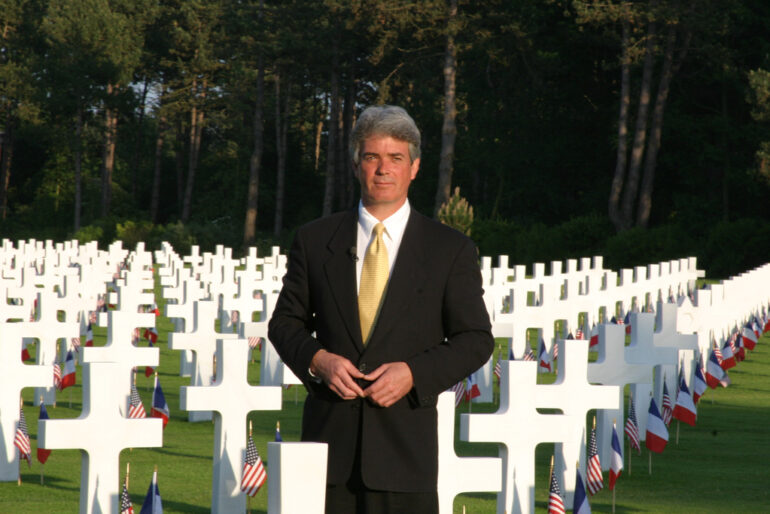

Fox News anchor John Roberts said he remains uncertain about the Trump administration’s negotiating strategy with Iran, raising questions during a discussion about Secretary of State Marco Rubio’s latest Senate testimony as diplomatic efforts continue alongside a U.S. naval blockade in the Strait of Hormuz.
The exchange highlighted the challenge facing policymakers as they attempt to balance pressure on Tehran with ongoing negotiations aimed at reaching a broader agreement and reopening one of the world’s most important waterways.
During the segment, Roberts played a clip from Rubio’s testimony before the Senate earlier in the day, where the secretary defended the administration’s decision to maintain the blockade.
“The only reason why there’s a U.S. blockade is because Iran has closed it,” Rubio said. “They’re firing on commercial ships and they’ve mined large segments of Hormuz international waters.”
Rubio argued that the blockade is directed solely at Iranian vessels and is intended as a response to actions that have disrupted international shipping.
“And so the blockade is only against Iranian ships,” Rubio continued. “We can’t live in a world in which they get to close the straits and tell everybody, ‘Pay us a toll or we’ll blow you up,’ but their ships get to go out unfettered.”
The Strait of Hormuz has become a central issue in the ongoing discussions between Washington and Tehran. The strategic waterway remains one of the key focal points of negotiations as President Donald Trump seeks an agreement that could potentially be reached within a week.
Introducing retired Navy Captain and former Pentagon official Brent Sadler, Roberts acknowledged that he was struggling to understand the administration’s broader approach.
“Secretary of State Marco Rubio reaffirming the need for the United States naval blockade of Iranian ports in the Strait of Hormuz,” Roberts said before turning to Sadler. “So I was going to start this off by saying, Brent, that I’m a little puzzled as to what the actual strategy of negotiation is.”
Roberts then cited a new Truth Social post from President Trump that had been published moments earlier.
In the message, Trump rejected reports claiming communications between the United States and Iran had ceased.
“Fake news reports that the Islamic Republic of Iran and the USA stopped speaking a few days ago are false and erroneous,” Trump wrote.
The president added that discussions had continued uninterrupted over the previous several days.
“The conversations between us have been going on continuously, including four days ago, three days ago, two days ago, one day ago, and today,” Trump wrote. “Where they lead, no one knows, but as I told Iran, it’s time — one way or another — for you to make a deal.”
Roberts asked Sadler whether the president’s comments suggested that a breakthrough might be approaching.
Sadler expressed skepticism.
“Not really,” he replied.
Rather than focusing on the prospect of a near-term agreement, Sadler argued that the administration’s leverage remains the more important factor.
“But again, it doesn’t really matter too much, as long as the president maintains the pressure, the leverage on the regime in Tehran,” he said.
According to Sadler, the blockade serves multiple purposes. In addition to placing pressure on Iran, he said it also affects countries that benefit from Iranian oil exports.
“The blockade provides that, but it also provides pressure on Iran’s benefactors, notably China, which is not getting its cheap oil from the region because of that,” Sadler said.
He argued that time currently favors the United States and suggested that sustained pressure could gradually weaken the Iranian regime.
“So really, on our side, we have time — the benefit of time — to kind of wear this regime down,” Sadler said.
As negotiations continue, the discussion underscored a central tension facing all sides: how to pursue a diplomatic resolution while maintaining the pressure tactics that many supporters believe are necessary. With talks ongoing and the future of the Strait of Hormuz still uncertain, questions remain about whether continued leverage will ultimately produce an agreement or prolong an already difficult standoff.
[READ MORE: Trump Reportedly Clashes With Netanyahu as Lebanon Fighting Threatens Diplomatic Efforts]