
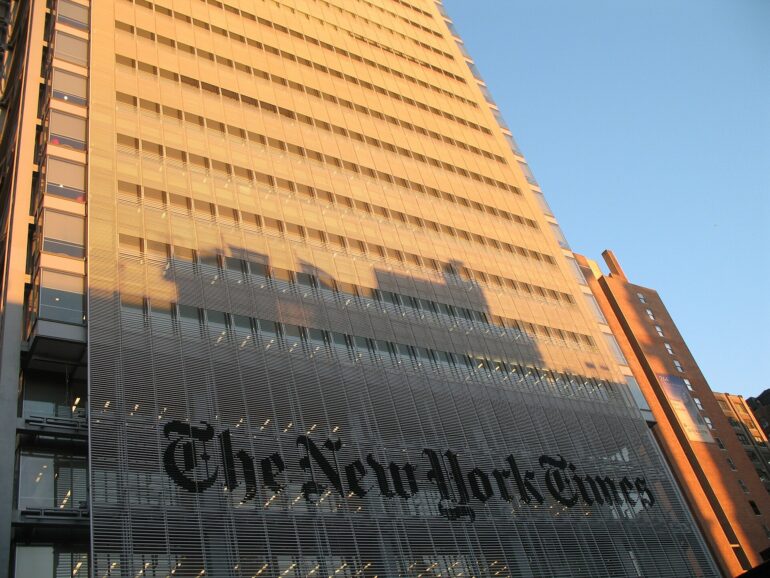

The The New York Times is now reportedly facing a lawsuit from one of its own employees, adding another layer to the ongoing friction between the prominent media outlet and the administration of Donald Trump.
According to reporting from the paper itself, the case centers on a complaint filed by a white male employee who claims he was denied a promotion due to his race and gender. The allegation has drawn attention not only for its claims of workplace discrimination, but also for the broader political backdrop in which it has emerged.
In response, the Times forcefully pushed back, rejecting the accusations and questioning the motivations behind the case. In a statement, the company said it “categorically rejects the politically motivated allegations” brought by the Equal Employment Opportunity Commission under the Trump administration. The Equal Employment Opportunity Commission, which enforces laws against workplace discrimination, has been central to advancing the complaint.
The newspaper maintained that its hiring and promotion decisions are grounded strictly in merit. A spokesperson emphasized that the organization is committed to identifying and advancing top talent, and that it intends to fight the claims in court. The Times further argued that the administration had strayed from standard procedures, calling its actions “highly unusual.”
At the heart of the dispute is a single personnel decision involving one of more than 100 deputy-level roles within the newsroom. The Times contends that the EEOC’s filing inflates that isolated case into sweeping conclusions that, in its view, do not reflect reality. The company insists that neither race nor gender influenced the decision and that the candidate ultimately selected was the most qualified, describing her as “an excellent editor.”
Still, the lawsuit lands at a time when tensions between the Trump administration and major media institutions have been steadily escalating. The president and his allies have intensified their criticism of outlets like the Times, framing them as politically biased and out of step with the public.
That broader campaign has extended beyond rhetoric. Brendan Carr, who chairs the Federal Communications Commission, recently launched an investigation into Disney, the parent company of ABC News, focusing on its diversity, equity, and inclusion policies. That probe has become part of a wider effort tied to the potential recall of several local broadcast licenses.

Meanwhile, Trump himself is engaged in a separate legal battle with the Times, suing the paper over its coverage leading up to the 2024 election. Leadership at the newspaper has made clear it intends to contest that case as well, setting the stage for a prolonged legal fight.
Taken together, these developments reflect a deepening clash between political power and the press. While the courts will ultimately decide the merits of the discrimination claim, the surrounding environment underscores how disputes over hiring practices, media coverage, and government oversight are increasingly intertwined. In an era marked by sharp divisions, even internal workplace decisions can become flashpoints in a much larger national conflict—one that raises questions not only about fairness and accountability, but also about how far such battles should go.
[READ MORE: Secret Service Officer Arrested in Miami Incident Raises Questions About Conduct and Accountability]