
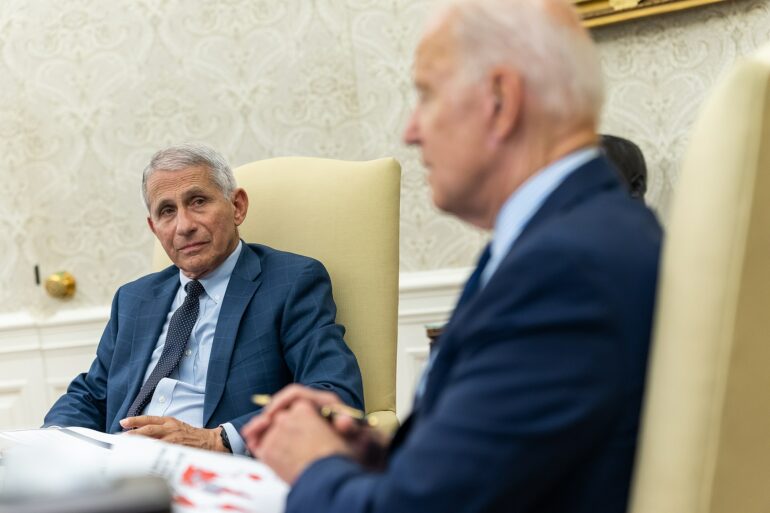

The U.S. Department of Justice has now reportedly indicted longtime government official David Morens, a former senior adviser to Anthony Fauci, accusing him of concealing records tied to investigations into the origins of COVID-19—a development that is likely to intensify scrutiny over how key decisions were handled during one of the most consequential public health crises in modern history.
Morens, 78, faces a series of serious charges, including conspiracy against the United States, destruction and falsification of records in a federal investigation, and concealment or removal of official documents. The indictment, unsealed in a Maryland federal court, also references two unnamed co-conspirators who allegedly worked alongside him to evade transparency laws, including the Freedom of Information Act and the Federal Records Act.
According to prosecutors, Morens engaged in a pattern of conduct designed to keep certain communications out of public view. Central to the case are emails in which he allegedly discussed using private accounts to conduct official business and explored ways to avoid records requests. In one April 2021 message, Morens wrote that he could send materials to Fauci’s private Gmail account or deliver them by hand, suggesting confidence that such communications would remain shielded.
In another exchange from February 2021, Morens indicated that he had learned how to make emails “disappear” after a FOIA request had been filed but before records searches began. He further acknowledged deleting earlier emails after transferring them to a private account, raising concerns about whether key information was intentionally removed from the public record.
Later that year, Morens reportedly reiterated his preference for using private email, noting that his official account was “FOIA’d constantly” and that he would delete anything he did not want appearing in the media. These communications, first brought to light in 2024, now form a significant part of the government’s case.
Beyond the email practices, Morens also played a role in overseeing a controversial National Institutes of Health grant awarded in 2014 to EcoHealth Alliance, a nonprofit organization. That funding ultimately supported bat coronavirus research conducted at the Wuhan Institute of Virology, a connection that has remained a focal point in ongoing debates about the pandemic’s origins.
In a statement accompanying the indictment, Acting Attorney General Todd Blanche described the allegations as a “profound abuse of trust,” particularly given the timing during the height of the global pandemic. He asserted that Morens and his alleged co-conspirators deliberately concealed information and falsified records in an effort to suppress alternative theories about how COVID-19 began.
Blanche emphasized that government officials carry a responsibility to provide accurate and transparent information, especially in moments of national and global uncertainty. Instead, he argued, the actions outlined in the indictment suggest an effort to control narratives rather than allow a full and open examination of the facts.
The case is likely to fuel broader concerns about accountability and openness within public institutions, particularly when the stakes are as high as they were during the pandemic. At a time when Americans were looking for clear guidance, the allegations raise difficult questions about whether critical information was withheld or manipulated.
While the legal process will ultimately determine Morens’ fate, the indictment underscores a deeper unease about how power is exercised behind the scenes—and how decisions made in times of crisis can carry lasting consequences far beyond the moment they occur.
[READ MORE: Trump Slams CBS Interview After WHCA Shooting, Questions Media Judgment Amid Chaotic Incident]