
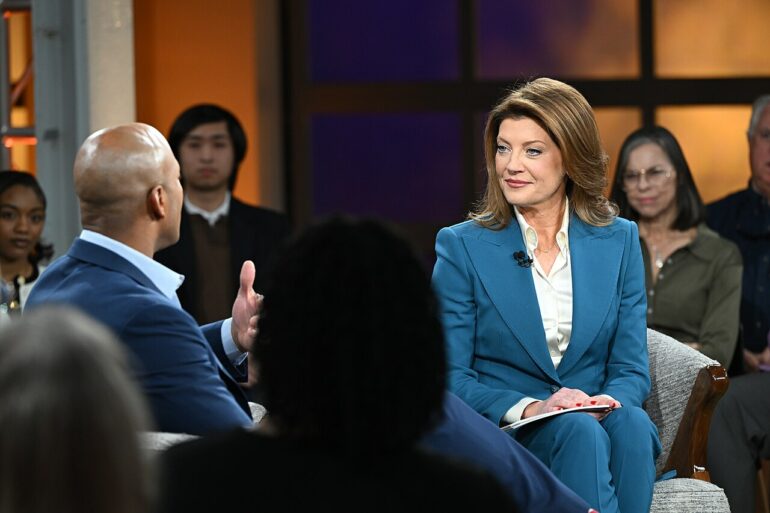

President Donald Trump sharply criticized CBS News correspondent Norah O’Donnell during a tense “60 Minutes” interview Sunday, accusing her of poor judgment after she read aloud from a reported manifesto tied to the suspect in Saturday’s shooting at the White House Correspondents’ Association dinner.
The president, clearly angered by the exchange, called O’Donnell’s actions “disgraceful” and accused the media of amplifying the words of a violent individual. “You shouldn’t be reading that on ‘60 Minutes.’ You’re a disgrace,” Trump said, after O’Donnell quoted language from the alleged manifesto that included inflammatory accusations directed at him.
The interview followed a dramatic and unsettling scene at the annual WHCA dinner, held at the Washington Hilton, where a heavily armed man breached security and exchanged gunfire with law enforcement. The chaos forced the evacuation of Trump, Cabinet members, lawmakers and other high-profile attendees. The event was ultimately canceled as authorities moved to secure the area.
Multiple reports identified the suspect as Cole Allen of Torrance, California. According to CBS News and other outlets, Allen authored a manifesto indicating he intended to target administration officials. A White House official confirmed that such a document existed.
During the interview, O’Donnell began reading excerpts from the manifesto, including statements that labeled administration officials as “targets” and contained personal accusations against the president. Trump forcefully rejected those claims, calling them the words of a “sick person” and insisting they had no basis in reality.
“I’m not a rapist. I didn’t rape anybody,” Trump said. “I’m not a pedophile. You read that crap from some sick person?” He added that he had been “totally exonerated,” expressing frustration at being linked to statements he described as baseless and offensive.
The president also challenged O’Donnell for what he viewed as selective reporting, pressing her to include other portions of the suspect’s writings, including anti-Trump and anti-Christian rhetoric. “Why don’t you read all the anti-Trump?” he asked. “You just did, so why don’t you read it?”
Despite the intensity of the exchange, the interview continued, with Trump offering a measured reflection on the broader situation. He said he was not personally fearful during the incident, describing it as part of living in an unpredictable world. “I wasn’t worried. I understand life,” he said. “We live in a crazy world.”
One Secret Service agent was injured during the confrontation but was saved by a bulletproof vest and reported to be in good spirits afterward.
Trump also revealed that he resisted initial efforts by law enforcement to quickly remove him from the ballroom as the situation unfolded, saying he wanted to understand what was happening in real time. He later described the suspect as “pretty incompetent,” noting that the individual was apprehended quickly.
While the incident raised serious concerns about security and public safety, Trump emphasized that such acts should not be allowed to disrupt longstanding traditions. He reiterated his call to reschedule the WHCA dinner within the next month, arguing that canceling it would effectively reward the actions of a violent individual.
“I don’t want to see it canceled,” he said. “I think it’s really bad for a crazy person to be able to cancel something like this.”
The episode underscored not only the volatility of the moment but also the ongoing tensions between the president and the media, particularly over how acts of violence—and the motivations behind them—are reported and discussed.