
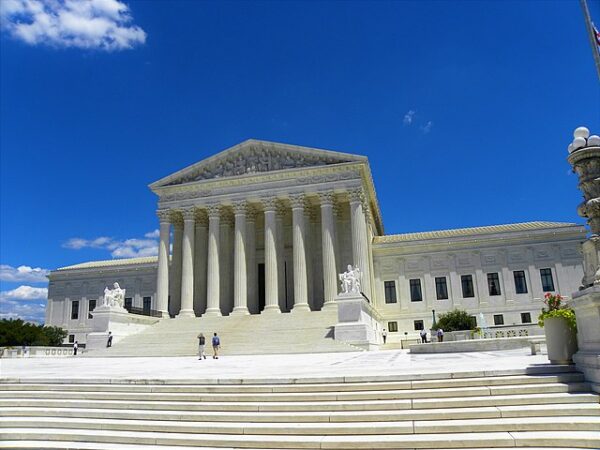

The Supreme Court on Thursday handed the Trump administration a significant victory on immigration, clearing the way for the administration to remove Temporary Protected Status (TPS) from hundreds of thousands of Haitian and Syrian immigrants living in the United States.
In a 6-3 decision split along ideological lines, the justices ruled that the administration may move forward with plans to revoke legal protections covering roughly 350,000 Haitians and 6,000 Syrians. Without TPS, those individuals could become subject to deportation through the normal legal process, although they may still pursue other forms of legal relief, including asylum claims.
Writing for the majority, Justice Samuel Alito said lower courts had exceeded their authority by second-guessing the administration’s decision to terminate the protections. The Supreme Court also rejected claims that ending TPS for Haitian immigrants amounted to unlawful discrimination.
The ruling follows two Supreme Court decisions issued last year that allowed the Trump administration to revoke similar legal protections for approximately 600,000 Venezuelans. Government attorneys argued those earlier rulings established precedent that should also apply to Haitian and Syrian TPS recipients.
Solicitor General D. John Sauer argued on behalf of the administration that decisions by outgoing Homeland Security Secretary Kristi Noem to revoke TPS designations are not subject to judicial review.
Created in 1990, the Temporary Protected Status program offers humanitarian relief to people from countries affected by war, natural disasters, or other extraordinary conditions. The designation allows recipients to legally remain in the United States and apply for work authorization in renewable 18-month periods.
Noem determined that both Haiti and Syria no longer satisfied the conditions necessary to retain TPS, concluding that circumstances in both countries had improved.
That determination drew scrutiny because the State Department currently advises Americans not to travel to either nation. Haiti has remained under a State of Emergency since March 2024, with the State Department warning of widespread violent crime, including robberies, carjackings, sexual assaults, and kidnappings for ransom. Regarding Syria, the department states that no part of the country is considered safe from violence.
Legal challenges were filed in both cases.
A Washington-based federal judge ruled in February that Noem had not followed the proper procedures when terminating Haiti’s TPS designation and found evidence suggesting the decision was motivated by what the court described as “anti-black and anti-Haitian animus.” The judge pointed to a December X post from Noem stating, “WE DON’T WANT THEM. NOT ONE,” referring to immigrants generally, as well as President Donald Trump’s 2018 remark describing Haiti as a “shithole country.”
The Haitian plaintiffs have also alleged that the administration relied on a knowingly false statement claiming Noem consulted with the State Department before making her decision.

In the separate Syrian case, a federal judge in New York ruled in favor of seven Syrian plaintiffs who had either already received TPS or had applied for it. Appeals courts declined to pause either lower court ruling while the cases moved through the legal system.
Attorneys representing Haitian TPS holders argued that deported migrants could “risk death” if returned to Haiti and also cited comments Trump made during the 2024 campaign about Haitians in Springfield, Ohio, as evidence of alleged racial bias. Lawyers representing the Syrian plaintiffs pointed to the ongoing conflict involving neighboring Iran as evidence that the region remains unsafe while questioning the administration’s emergency request for Supreme Court intervention.
The Trump administration has also revoked TPS designations for Afghanistan and Cameroon. According to the National Immigration Forum, approximately 1.3 million people from 17 countries held Temporary Protected Status as of March 2025.
Separately, the administration also ended a Biden-era parole program that had allowed more than 500,000 migrants from Cuba, Haiti, Nicaragua, and Venezuela to remain in the United States while their immigration claims were being processed, a move the Supreme Court also allowed to take effect last year.
[READ MORE: Federal Judge Halts ICE Arrests at Immigration Courthouses Nationwide]