

A newly released poll is reportedly turning heads in Republican circles, suggesting the race for the party’s 2028 presidential nomination may be far from settled—and possibly shifting in a direction few expected just months ago.
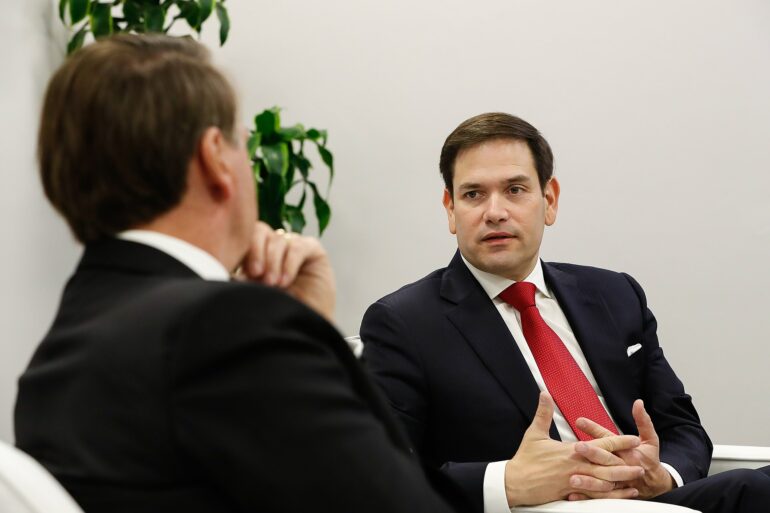
According to a survey conducted by AtlasIntel between May 4 and May 7, Secretary of State Marco Rubio has emerged as the top choice among Republican voters. The poll, which sampled 2,069 American adults, found that 45.4% of Republican respondents prefer Rubio to carry the GOP banner in the next presidential election cycle.
That puts Rubio well ahead of Vice President JD Vance, who has long been seen as the frontrunner. Vance placed second with 29.6%, a notable drop from his previous standing. Florida Governor Ron DeSantis trailed in third with 11.2%, while 10.3% of respondents said their preferred candidate was not listed among the options. Entrepreneur and Ohio gubernatorial candidate Vivek Ramaswamy came in fourth with 1.4%.
The numbers mark a sharp reversal from AtlasIntel’s December poll, which had shown Vance with a commanding lead over Rubio, 46.7% to 22.6%. The shift underscores how fluid the Republican field remains, even this early in the process.
Among the broader public, however, both leading contenders face challenges. Rubio’s favorability stands at 46% positive compared to 51% negative, while Vance’s numbers are even more underwater, with 37% positive and 58% negative. Those figures suggest that while the GOP base may be coalescing around certain figures, the general electorate could prove more difficult terrain.
President Donald Trump added to the intrigue earlier this week when he playfully floated the idea of a joint ticket. Speaking to a crowd at the White House, Trump asked attendees whether they preferred Vance or Rubio, before joking that the combination might make a “dream team.” He quickly clarified that the remark should not be interpreted as an endorsement, leaving the field—and speculation—wide open.
Veteran political analyst Mark Halperin offered a more cautious take, suggesting that the dynamics between Rubio and Vance could ultimately shape whether either man runs at all. Halperin noted that while Vance remains a strong contender, he may struggle in head-to-head comparisons, particularly when it comes to public perception and likability.
At the same time, Halperin raised the possibility that personal considerations could weigh heavily on both men. With young families and a clear understanding of the intense scrutiny that accompanies a presidential campaign, either—or both—could opt out of the race altogether.

If Vance were to step aside, Halperin argued, Rubio would likely be in a commanding position, potentially benefiting from support within the party’s leadership. If both choose to run, however, he suggested the contest might take an unconventional turn, with the two allies possibly joining forces rather than competing directly.
As the Republican Party looks ahead to 2028, the early jockeying reflects not just shifting preferences within the base, but also broader questions about leadership, electability, and the direction of the country. In a political climate often dominated by high-stakes global concerns, the emerging debate within the GOP may ultimately hinge on who can best navigate both domestic priorities and the pressures that come with America’s role on the world stage.
[READ MORE: Hegseth Slams Sen. Mark Kelly Over Remarks on Classified Briefing Amid Growing War Concerns]