
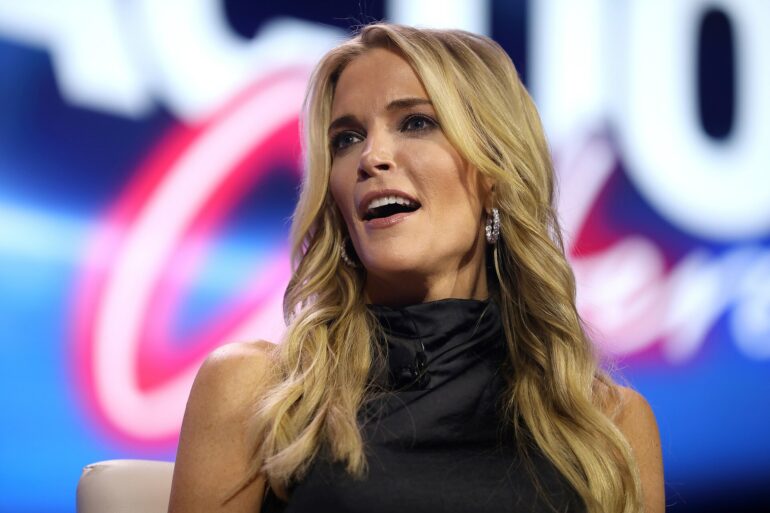

Sirius XM host Megyn Kelly delivered a blunt warning this week as a wave of new polling data paints a troubling picture for President Donald Trump and Republicans heading into the midterm election cycle.
Speaking on her show, Kelly reacted with visible frustration to what she described as a series of deeply negative numbers, arguing that the situation has moved beyond a temporary dip and into more serious political territory. While polling fluctuations are nothing new, she suggested that the latest figures signal a broader and more persistent problem—particularly among independent voters.
Kelly pointed to a recent Associated Press poll showing Trump’s approval rating at just 33 percent, marking the lowest level of his second term. But it was the breakdown among independents that drew her strongest reaction. According to the data she cited, only 23 percent of independent voters approve of Trump’s overall job performance, a figure she described as a collapse rather than a simple decline.
Even on issues where Republicans have traditionally found stronger footing, the numbers appear weak. Kelly noted that Trump’s approval among independents on immigration rises slightly to 30 percent, but from there, she said, support drops sharply across other key areas.
One of the most striking figures she highlighted was related to the ongoing conflict with Iran. Just 21 percent of independents support the war, leaving a significant majority opposed. Kelly warned that such a lopsided divide could prove politically damaging, emphasizing that winning elections becomes increasingly difficult when a large share of swing voters are aligned against a party’s position.
Economic concerns appear to be compounding the challenge. Kelly cited polling showing only 19 percent of independents approving of Trump’s handling of the economy, with even lower numbers—just 12 percent—supporting his approach to the cost of living. She argued that these issues were already a source of frustration for voters before the conflict with Iran began, suggesting that the added strain of rising energy costs could deepen existing dissatisfaction.
Kelly connected the dots between foreign policy decisions and domestic economic pressures, warning that the impact of global instability often reaches American households. She pointed to rising gas and energy prices in Europe as an early indicator of what could follow in the United States, noting that economic effects tied to international conflicts rarely remain contained for long.
Her remarks reflected a broader concern about timing. With the midterm elections still months away, Kelly suggested there may be an opportunity for Republicans to recalibrate their approach. But she stressed that any course correction would need to happen quickly if the party hopes to regain ground with independent voters.

The commentary also underscored a recurring tension in American politics: the intersection of foreign policy and economic reality. While national security decisions are often framed in strategic terms, their consequences can ripple through everyday life, shaping public opinion in ways that are difficult to ignore.
As the polling numbers continue to circulate, Kelly’s message was clear—whether one agrees with her tone or not, the data signals a challenge that cannot be easily dismissed. For a party looking to maintain momentum, the road ahead may depend not just on political messaging, but on addressing the concerns of voters who appear increasingly uneasy with both economic conditions and the direction of foreign policy.
[READ MORE: Concerns Grow as GOP Rep. Tom Kean Jr. Goes Quiet Amid Tough Midterm Landscape]