
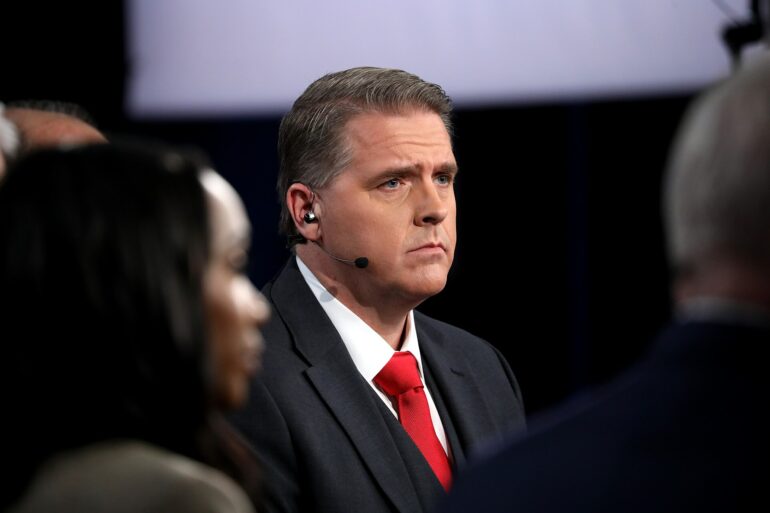

Tensions inside CNN spilled into public view this week as contributor Scott Jennings faced a new round of accusations from current and former network figures, raising questions about consistency, credibility, and the state of political debate on cable news.
The controversy began when former Trump administration official Miles Taylor alleged that Jennings mocked Donald Trump behind the scenes, only to return on air as a staunch defender of the president. According to Taylor, Jennings’ tone in the green room during commercial breaks sharply contrasted with his televised commentary.
That claim quickly gained traction. Former congressman and CNN contributor Joe Walsh backed Taylor’s account the following day, adding another layer of criticism. Walsh went further, accusing Jennings of using his influence to have him excluded from appearances on “CNN NewsNight with Abby Phillip.”
Soon after, former CNN regular Julie Roginsky joined in, saying she could corroborate the accounts. Roginsky stated that she personally witnessed Jennings criticizing Trump off-camera and suggested he may play a role in determining who appears on the network. She also claimed she was “banned” from CNN after publicly calling him out.
When pressed online about why she would continue appearing alongside Jennings, Roginsky responded that she no longer does, reiterating her belief that she had been sidelined by the network.
The pile-on did not stop there. Another former CNN contributor, Wajahat Ali, echoed similar claims, stating that Jennings behaved in a comparable manner during his own time at the network. Ali added that such conduct was not unique, alleging that most Republican commentators engaged in similar behavior, with a few exceptions.
Meanwhile, current “NewsNight” regular Neera Tanden offered a different perspective, saying she had not been banned and recounting what she described as a “meltdown” from Jennings during one of her early appearances on the program.
Roginsky’s criticism extended beyond social media. Her last CNN appearance came on January 18, during a segment with Jennings, just one day before she published a sharply worded Substack post criticizing both him and the network itself. In that piece, she argued that CNN’s reliance on Jennings reflects a broader decline in the network’s standards.

She wrote that CNN once prided itself on seriousness and restraint, suggesting that its current direction risks undermining that reputation. Roginsky also took aim at Jennings’ on-air style, accusing him of interrupting, speaking over others—particularly women—and prioritizing confrontation over substance.
The unfolding dispute highlights deeper fractures within cable news at a time when political coverage is already under intense scrutiny. While networks often promote ideological diversity, critics argue that the line between debate and performance has grown increasingly blurred.
For viewers, the episode may reinforce concerns that televised political discussions are less about informing the public and more about scoring points. And as broader national debates continue—some with far higher stakes—the spectacle of internal media feuds serves as a reminder that clarity and consistency in public discourse remain as important as ever.
[READ MORE: Intelligence Report Raises Questions on Ukraine Aid, Election Allegations, and Oversight Amid Ongoing War]