
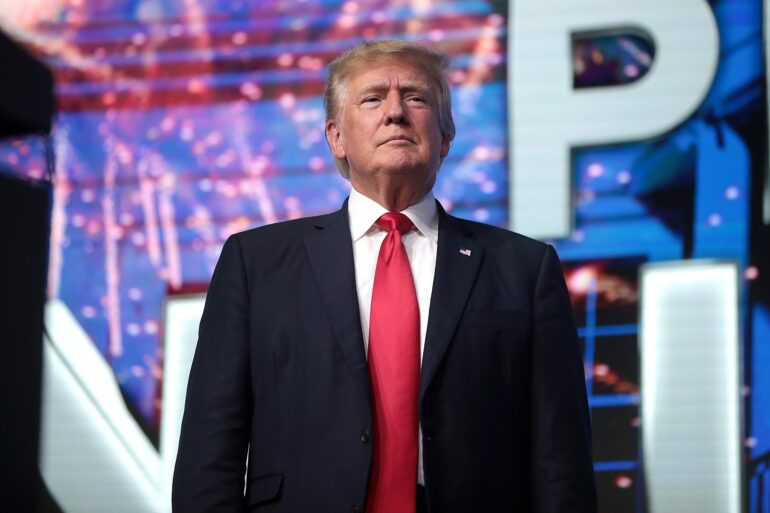

President Donald Trump arrived Tuesday at Walter Reed National Military Medical Center outside Washington for what the White House described as his regularly scheduled physical examination, marking the third such checkup since returning to office in January 2025.
The visit comes just weeks before Trump’s 80th birthday on June 14, a milestone that has naturally intensified public attention surrounding the health and stamina of the nation’s oldest sitting commander in chief. While the president has repeatedly projected confidence about his condition, critics and supporters alike have continued to scrutinize visible signs of aging that have surfaced during public appearances.
Sharp-eyed observers in recent months have pointed to bruising visible on Trump’s hands, along with noticeable swelling in his legs. Trump has attributed the bruising to frequent aspirin use, while reports have linked the swelling to chronic venous insufficiency, a condition associated with impaired blood flow in the veins.
Even so, Trump and his allies have aggressively pushed back on any suggestion that the president is physically or mentally diminished. The administration has consistently framed Trump as energetic and fully capable of handling the immense pressures of the presidency during a period marked by growing global instability and rising tensions abroad.
The president himself has often embraced the debate head-on, touting his performance on multiple cognitive exams and insisting that he continues to outperform expectations. Trump has repeatedly boasted in speeches and interviews that he has “aced” cognitive testing, presenting those results as evidence that he remains mentally sharp despite relentless political attacks and constant media speculation.
Top health officials in the administration have echoed those claims, frequently praising Trump’s overall condition and dismissing concerns about his age as politically motivated noise amplified by opponents and members of the press.
Still, presidential health remains a subject Americans tend to follow closely, particularly during moments of heightened geopolitical tension and military conflict. The modern presidency demands relentless travel, constant decision-making, and the burden of navigating crises that can shift by the hour. Even loyal supporters of the president have acknowledged that the office itself can exact a heavy toll on those who occupy it.
Trump has long sought to portray strength and endurance as defining characteristics of his leadership style, often contrasting himself with political rivals whom he depicts as weak or incapable. His public appearances, campaign-style rallies, and packed schedule have been central to that image since returning to the White House earlier this year.

Tuesdays’s examination at Walter Reed is expected to renew discussion about transparency regarding presidential health, an issue that routinely becomes politically charged regardless of which party occupies the Oval Office. For now, however, the White House continues to insist that Trump remains in strong physical and mental condition as he approaches his eighth decade.
Whether the latest physical quiets speculation or fuels another round of debate remains to be seen. But at a time when Washington remains consumed by international conflict, economic anxieties, and domestic political battles, the health of the commander in chief is certain to remain under a microscope.
[READ MORE: Taiwan Arms Delay Raises New Questions As Pentagon Balances Iran War And China Talks]