
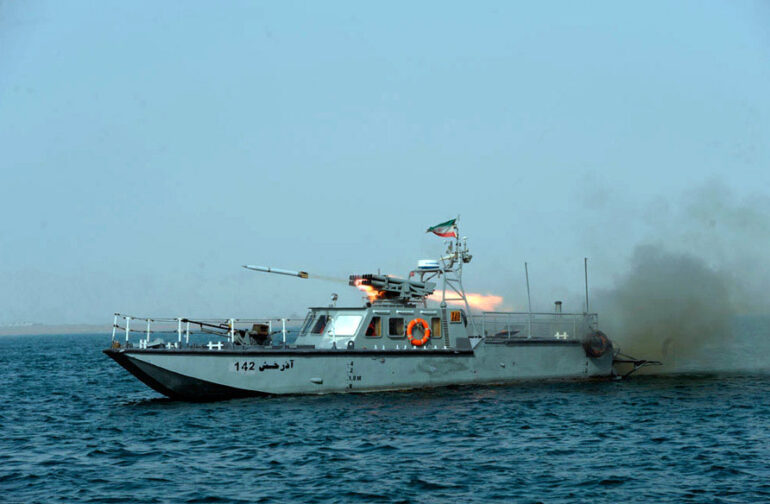

Iran and Oman are now reportedly discussing a new toll system for ships passing through the strategically vital Strait of Hormuz, a proposal that drew swift opposition from President Donald Trump and top U.S. officials as the ongoing regional conflict continues to rattle global energy markets.
The discussions were first reported by Bloomberg News after Iranian Ambassador to France Mohammad Amin-Nejad confirmed that talks between Tehran and Muscat had taken place regarding possible transit fees tied to navigation and security services in the waterway.
“Iran and Oman must mobilize all their resources both to provide security services and to manage navigation in the most appropriate manner,” Amin-Nejad said Wednesday.
He added that such efforts “will entail costs,” though he insisted any future toll system would operate transparently.
The proposal comes after Iran shut down the Strait of Hormuz in retaliation following the U.S.-Israeli bombing campaign that began Feb. 28, a move that has sent shockwaves through global trade and energy markets. The narrow waterway, positioned between Iran and Oman, serves as a crucial shipping corridor connecting the Persian Gulf to the Gulf of Oman and the Arabian Sea.
President Trump on Thursday forcefully rejected the idea of making ships pay a permanent fee to move through the strait.
“We want it open; we want it free,” Trump told reporters from the Oval Office. “We don’t want tolls.”
Secretary of State Marco Rubio echoed that position, warning that the international community would not accept such a system.
“No one in the world is in favor of the tolling system. It can’t happen. It would be unacceptable,” Rubio said Thursday. “It would make a diplomatic deal unfeasible if they were to continue to pursue that.”
Iran has since moved to tighten its control over the region by expanding its claimed jurisdiction over portions of the strait and creating a new entity called the Persian Gulf Strait Authority.
On Wednesday, the authority announced on social platform X that Iran had “defined the boundaries of the Strait of Hormuz management supervision area” and stated that vessels would now require authorization from the organization to transit the waterway.
According to Bloomberg News, some ships have reportedly faced payment demands reaching as high as $2 million for passage through the strait, though the full scope of enforcement efforts remains unclear.

The situation has intensified concerns across global markets as shipping disruptions continue to drive up energy prices worldwide. The closure of the strait has already severely impacted commercial transit and added new pressure to oil and gas supplies at a time when consumers are increasingly feeling the economic effects of instability overseas.
According to AAA, the national average gasoline price in the United States stood at roughly $4.55 on Friday. That figure represents an increase of more than $1.30 since the conflict began, though prices dipped by one cent from Thursday’s levels.
The developments also highlight how rapidly foreign conflicts can spill into the daily lives of ordinary Americans. While leaders debate military responses, sanctions, and diplomatic leverage, rising fuel prices and supply disruptions continue hitting families and businesses back home.
The Strait of Hormuz has long been viewed as one of the world’s most sensitive maritime chokepoints, and the latest standoff underscores how quickly escalating tensions in the Middle East can reshape global commerce and energy markets far beyond the region itself.
[READ MORE: Colorado Democrats Rebuke Polis After Tina Peters Sentence Commutation]