

President Donald Trump on Monday pushed back against claims that conservative backlash drove his decision to remove a controversial AI-generated image portraying him in a Christ-like role, insisting the move had nothing to do with criticism from figures like activist Riley Gaines.
The image, which circulated on Truth Social, depicted Trump in a flowing white robe with a red shawl, placing his hand on a man’s forehead in what appeared to resemble a healing scene. The setting included symbolic imagery: a hospital bed, onlookers in prayer, patriotic elements like bald eagles and fighter jets, and even ghostly figures of service members emerging through the clouds. Fireworks lit up landmarks such as the Statue of Liberty and the Lincoln Memorial, creating a dramatic and highly stylized portrayal that quickly drew attention.
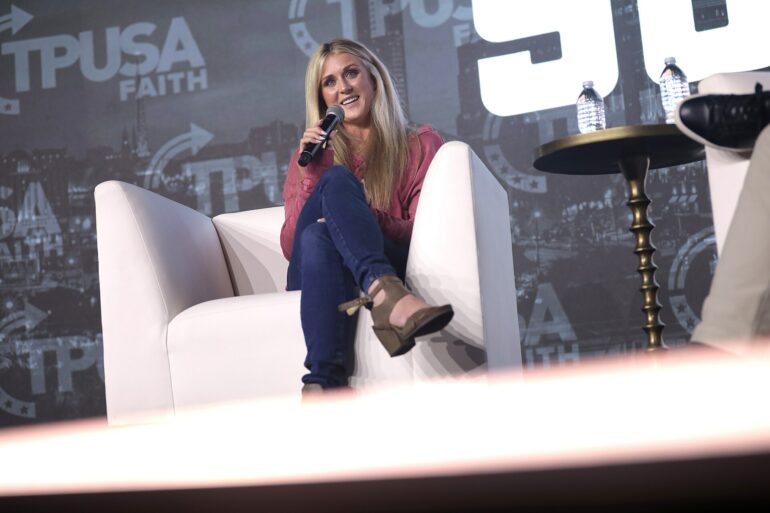
Some conservatives and Christian voices sharply criticized the post, calling it inappropriate and even blasphemous. Gaines, a prominent conservative activist, was among those who said the image “missed the mark,” while still expressing support for Trump personally.
She emphasized humility and faith, writing that “God shall not be mocked,” while also acknowledging human imperfection and voicing hope for shared salvation.
Despite that criticism, Trump made clear in remarks to CBS News that Gaines’ comments did not factor into his decision. In fact, he dismissed her influence outright, saying he is “not a big fan” of the activist. Instead, the president suggested the controversy stemmed from media mischaracterization, arguing that the image was intended to depict him as a doctor or humanitarian figure.
“I thought it was me as a doctor,” Trump said, adding that it was meant to reflect support for organizations like the Red Cross. He criticized what he called “fake news” for interpreting the image as a religious statement, maintaining that the intention was about helping people and “making people better.”
Still, the backlash highlights an ongoing tension within Trump’s own political base, particularly among religious conservatives who have often been key supporters. The episode underscores how symbolism—especially when it touches on matters of faith—can quickly ignite controversy, even among allies.
The dispute also unfolds against the backdrop of Trump’s escalating rhetoric on the global stage, including his recent clash with Pope Leo XIV. The pope has openly criticized U.S.-Israeli strikes on Iran, reflecting broader concerns about the human cost and moral implications of continued conflict. Trump, in turn, has accused the pontiff of being “terrible on Foreign Policy” and suggested that his own leadership plays a decisive role in global religious dynamics.

Pope Leo responded firmly, stating he is unafraid to speak out and remains committed to delivering the message of the Gospel. His remarks point to a widening divide not only over policy but over deeper questions of morality and leadership in times of war.
While the AI image controversy may seem minor compared to global tensions, it reveals a larger dynamic: even as political leaders project strength, moments like these can expose sensitivities around faith, perception, and the limits of power.
[READ MORE: Federal Judge Dismisses Trump Defamation Suit Against Wall Street Journal, Marking Legal Setback]