
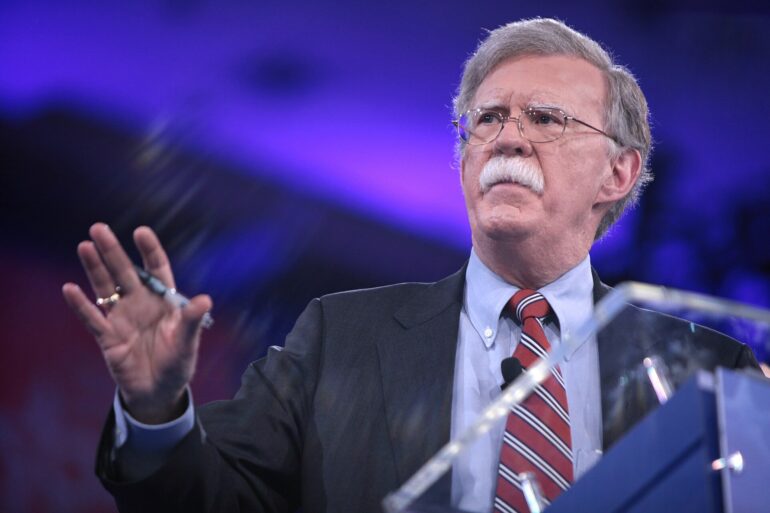

Former national security adviser John Bolton is sharply criticizing a tentative agreement under consideration between the United States and Iran, arguing that the administration’s approach is being driven more by concerns about gasoline prices than by long-term strategic interests.
Speaking Thursday on NewsNation’s “Elizabeth Vargas Reports,” Bolton described the proposed arrangement as a major setback for Washington and questioned the motivations behind the negotiations.
“It’s a big defeat for the United States,” Bolton said.
The former Trump administration official argued that the effort was not rooted in what he sees as a broader strategic assessment of American interests.
“I think this is a mistake,” Bolton said. “I think it is being undertaken not because of any strategic analysis of the importance to the United States. It’s because of the administration’s fear of high gasoline prices at the pump in the United States.”
“That is what is driving this,” he added.
According to a report first published by Axios, the tentative agreement would take the form of a 60-day memorandum of understanding aimed at extending the current ceasefire and reopening the Strait of Hormuz, a critical global shipping route through which more than 20 percent of the world’s oil and gas supply passes.
Under the reported framework, Iran would agree not to impose tolls on commercial vessels traveling through the waterway and would remove all mines from the strait.
In exchange, the United States would lift its naval blockade, provide certain sanctions waivers allowing Iran to sell oil more freely, and commit to discussions regarding broader sanctions relief.
The proposed memorandum would also include an Iranian commitment not to pursue a nuclear weapon. However, the report noted that Tehran has made similar claims for years, assertions that have been challenged by nonproliferation experts.
According to Axios, early negotiations would focus on how to handle Iran’s stockpile of highly enriched uranium and how future uranium enrichment would be addressed.
Bolton expressed concern that Iran could use the agreement as an opportunity to strengthen its position while difficult issues remain unresolved.
“What Iran is counting on is that, as this process drags out — as all the key issues are kicked down the road — that our forces will begin to melt away,” Bolton said.
He argued that additional oil revenue could help Iran replenish assets, rebuild elements of its military program, and reduce the economic pressure currently facing the regime.
Bolton, who also served as U.S. ambassador to the United Nations, suggested that Iranian leaders may believe time is working in their favor as American political attention increasingly turns toward upcoming elections.
According to Bolton, Tehran may calculate that the likelihood of renewed military action decreases as Election Day approaches.

He said he believes the chances of President Trump following through on threats to resume the use of force in the region will “diminish the closer we get to the elections.”
“They think we’ve got a short attention span, we’re obsessed by the elections,” Bolton said.
During the interview, host Elizabeth Vargas pointed out that President Trump recently stated he does not care about the midterm elections. Bolton rejected that claim, responding, “That’s all he cares about.”
Bolton returned repeatedly to the issue of energy prices, arguing that the administration views the reopening of the Strait of Hormuz as a way to lower petroleum costs and ease economic concerns at home.
“This is about price at the pump of gasoline,” Bolton said. “And he thinks if he can get the Strait of Hormuz open, global price of petroleum will fall, price at the pump here will fall, inflation will fall and election chances will look better in November. That’s exactly what it’s about.”
The debate surrounding the proposed agreement underscores the difficult balance between economic concerns, diplomatic negotiations, and regional security issues. While supporters of a ceasefire extension may point to reduced tensions and restored commercial traffic through a vital shipping corridor, critics such as Bolton warn that temporary agreements can carry long-term risks if fundamental disputes remain unresolved.
[READ MORE: Federal Judge Temporarily Halts Trump Anti-Weaponization Fund Amid Growing Legal Fight]