
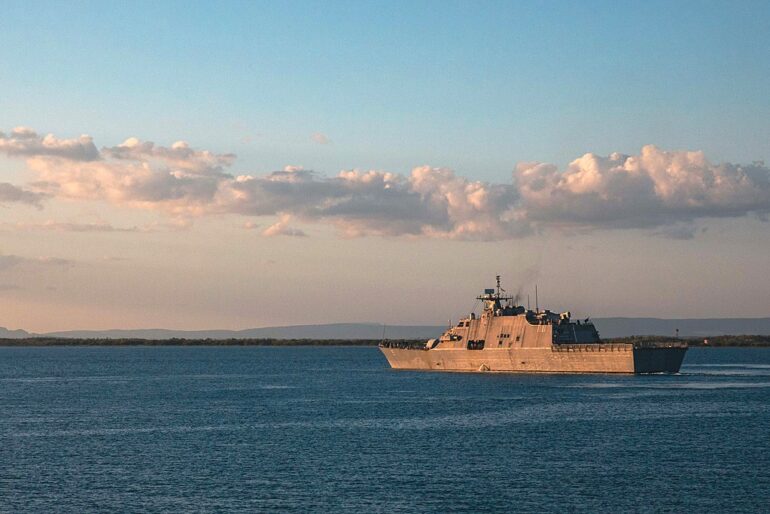

Two U.S. Navy vessels operating under the authority of U.S. Southern Command collided Wednesday during a replenishment-at-sea operation in waters near South America, military officials confirmed. The Arleigh Burke-class guided missile destroyer USS Truxtun and the Supply-class fast combat support ship USNS Supply made contact while conducting a routine at-sea resupply, resulting in minor injuries to two personnel.
U.S. Southern Command spokesman Steven McLoud, in an emailed statement, said the collision occurred as the two ships carried out a replenishment-at-sea — a maneuver that requires vessels to sail in close formation while transferring fuel, food and other supplies connected by lines and hoses. The exact location of the incident was not disclosed, and the cause of the collision remains under investigation. Both ships have reported they are sailing safely following the contact.
The two service members who were injured suffered only minor wounds and are in stable condition, military officials said. No further details about their status or which ship they were aboard have been released.
Replenishment-at-sea operations are complex and demanding, requiring precise coordination as vessels maintain parallel courses just a few hundred feet apart. These operations are essential to keeping forward-deployed ships fueled and ready without requiring port calls, but they carry inherent risk given the tight maneuvering involved.
The Truxtun, homeported in Norfolk, Virginia, had recently deployed to the Southern Command area of operations, joining a larger naval buildup in the region. That force — which includes about a dozen surface warships and the nuclear-powered aircraft carrier USS Gerald R. Ford — was ordered into the Caribbean and adjacent waters as part of a sustained campaign directed by the Trump administration. According to U.S. officials and reporting, that effort aims to counter drug trafficking and other regional threats, with the carrier strike group and associated amphibious assets providing a visible demonstration of U.S. military resolve.
The USNS Supply, also based in Norfolk, is a fast combat support ship designed to replenish carrier strike groups and other surface forces with fuel and supplies while underway. Both vessels continued on station after the collision.

Collisions among U.S. Navy vessels are rare, and the incident will be subjected to a formal inquiry to determine contributing factors. Officials have not offered a timeline for completion of that investigation nor commented on whether any procedural changes might result.
This event recalls previous mishaps, including separate deadly collisions in 2017 in the Pacific that claimed 17 sailors. While there is no indication yet that this latest incident approached that level of severity, it underscores the challenges and hazards inherent in sustaining forward-deployed naval forces.
For now, Navy leaders have emphasized that both ships remain operational and that the well-being of the crew is their foremost concern as they continue the mission.