
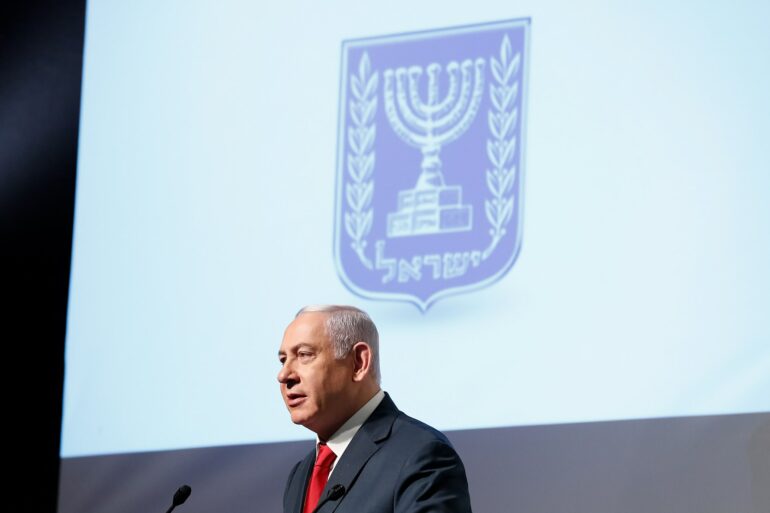

President Trump and Israeli Prime Minister Benjamin Netanyahu reportedly butted heads during a tense weekend phone call over the future of the war with Iran, with one source describing the conversation as “a shouting match from hell.”
The report, published by the Israeli outlet Ynet, said the call centered on Netanyahu’s push to resume military strikes on Iran. Trump, meanwhile, has signaled that he wants to give diplomacy more time as negotiations with Tehran continue.
Netanyahu’s office forcefully pushed back on the account, calling it “fake news” and “complete nonsense.” A senior Israeli official confirmed the call took place but insisted it was “very much not a difficult conversation.”
The reported clash comes as Netanyahu publicly argues that the Iranian regime itself is the problem.
“Iran is working to renew the nuclear threat. The only way to permanently remove this existential threat is by toppling the ayatollah regime,” Netanyahu told the Knesset on Tuesday.
The president has struck a more cautious tone. In an interview with CBS’ “60 Minutes” that aired Sunday, Trump again said he was reluctant to escalate the conflict. On Monday, he held talks with Qatari Prime Minister Sheikh Mohammed bin Abdulrahman Al Thani, who has been mediating between Washington and Tehran.
Secretary of State Marco Rubio said Tuesday that the U.S. is not preparing to resume military strikes. He noted that the administration’s ongoing economic pressure campaign against Iran is doing much of the heavy lifting.
The Financial Times reported earlier this week that Netanyahu has been calling Trump nearly every day to urge him to restart the war, and that Arab leaders are increasingly alarmed by the effort. Gulf leaders fear that renewed U.S. military action could prompt Iran to retaliate against civilian targets in their countries and send international oil prices higher.
The U.S. and Israel launched the war against Iran on Feb. 28. The conflict has disrupted shipping through the Strait of Hormuz, a critical chokepoint that normally carries roughly a fifth of the world’s seaborne oil and liquefied natural gas trade. Trump has vowed to maintain a naval blockade of Iranian ports, while Iran has attacked tankers traveling along U.S.-designated shipping routes.

In July, the U.S. carried out a round of large-scale strikes, which Washington said were a response to Iranian violations of agreements concerning the Strait of Hormuz. The administration then shifted away from large-scale military force and toward sanctions and economic pressure.
This is not the first time tensions between the two leaders have spilled into public view. In June, multiple outlets reported that Trump angrily berated Netanyahu during a call over Israeli strikes in Lebanon, which the president believed were threatening negotiations with Iran. Trump later acknowledged the heated exchange.
Despite the friction, the two leaders broadly agree on the core objective of preventing Iran from ever obtaining a nuclear weapon. The disagreement is over how to get there, and whether the answer is more military force or more pressure at the negotiating table.
[READ MORE: Seven GOP Senators Push to Delay Thune’s Leadership Vote After Midterm Losses]