
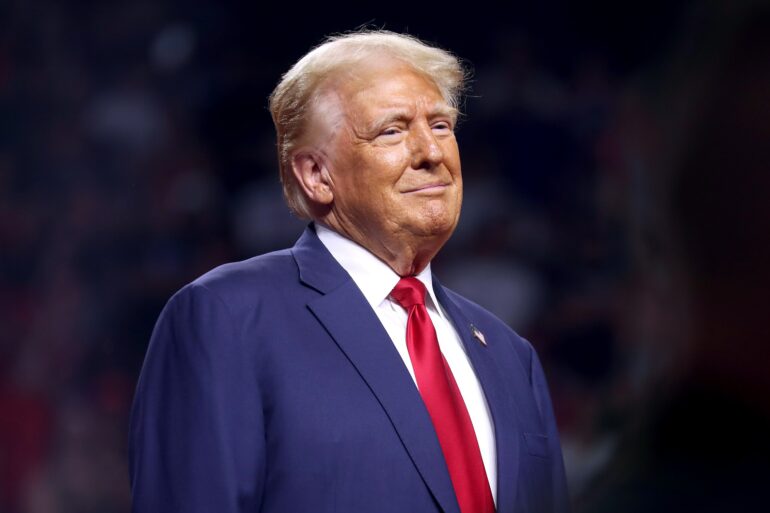

President Donald Trump signed a new executive order Tuesday directing federal agencies and financial institutions to intensify scrutiny of banking activity tied to illegal immigration, marking another major step in the administration’s effort to deliver on its long-promised border and immigration crackdown.
The order instructs the Treasury Department to issue formal advisories to banks and other financial institutions outlining potential warning signs tied to unlawful cross-border financial activity. Among the “red flags” identified are payroll tax evasion, attempts to conceal identity, labor trafficking or forced labor, and the use of unregistered money service businesses or third-party payment platforms.
The administration also flagged the use of individual taxpayer identification numbers, commonly known as ITINs, to obtain credit or open financial accounts as an area of concern.
“My Administration will not tolerate national security and public safety risks caused by illicit cross-border financial activity, nor will it permit risks to our financial system posed by the extension of credit or financial services to the inadmissible and removable alien population,” the executive order states.
The move reflects the administration’s broader argument that weak oversight in financial systems can create vulnerabilities tied to illegal immigration, criminal activity, and potential national security threats. Supporters of tougher enforcement have long argued that the federal government has failed to adequately monitor how financial institutions interact with individuals lacking legal status in the country.
At the same time, the order stopped short of adopting one of the administration’s more controversial ideas: requiring banks to directly collect citizenship information from customers. Treasury Secretary Scott Bessent had previously indicated such a proposal was under consideration earlier this year.
“And I don’t think it’s unreasonable, because: Why don’t we have information on who’s in our banking system?” Bessent told Semafor in April. “I have a place in the UK; they want to know who lives in every apartment. And how do we know that it’s not part of a foreign terrorist organization?”
Instead of mandating citizenship checks outright, the administration opted for a narrower approach centered on expanded due diligence requirements and heightened monitoring standards.
The order specifically directs the Treasury secretary to work with federal regulators on proposed changes to the Bank Secrecy Act aimed at strengthening what the administration calls “risk-based customer due diligence requirements” for financial institutions.
It also singles out photo identification documents issued by foreign embassies and consulates to citizens living abroad, warning they may pose risks to the “integrity” of the U.S. financial system.
Immigration advocates and tax experts cautioned that the policy changes could heavily affect immigrants who are legally allowed to remain in the country under programs such as Deferred Action for Childhood Arrivals, known as DACA, and Temporary Protected Status, or TPS.

Meanwhile, banking industry leaders reportedly expressed concern about how far the administration might go. According to Reuters, executives and lobby groups warned officials last month that stricter requirements could become expensive, disruptive, and potentially push millions of people outside the traditional banking system altogether.
Ed Mills, a Washington policy analyst with Raymond James, told Reuters that such an outcome could create unintended consequences.
“Obviously, the administration wants greater controls on immigration, but the bank regulators have always wanted as many financial transactions to go through the traditional financial systems,” Mills said. “This would have removed a lot of individuals from the financial system, which could create a national security risk as well.”
The debate underscores a growing divide in Washington over how aggressively the federal government should use financial institutions as part of immigration enforcement efforts. While supporters argue tighter controls are necessary to protect national security and uphold the rule of law, critics continue to warn that sweeping crackdowns can create broader disruptions that extend well beyond the border itself.
[READ MORE: Treasury Legal Chief Steps Down as DOJ Launches Massive ‘Anti-Weaponization’ Settlement Fund]