
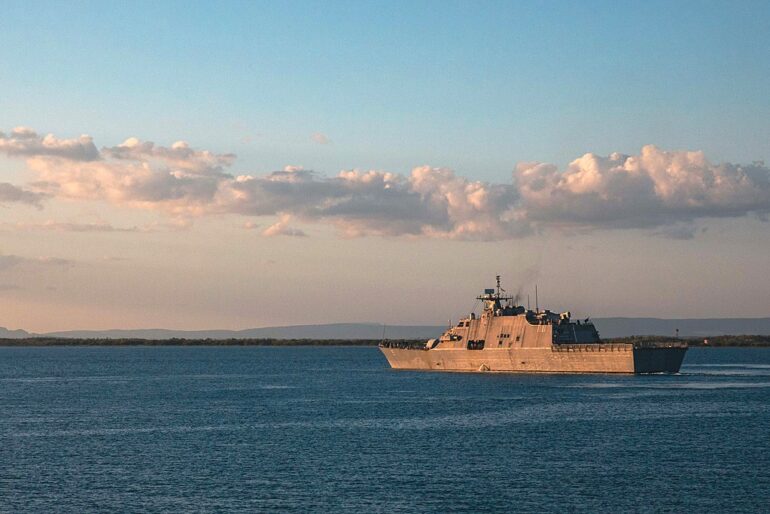

A U.S. Navy destroyer temporarily lost power and propulsion this week after an electrical malfunction triggered a fire aboard the vessel, highlighting the challenges facing a force operating at a high tempo in increasingly tense global waters.
According to officials, the USS Higgins experienced what was described as an “engineering casualty” tied to its electrical distribution system while sailing in the Indo-Pacific region. The incident occurred Tuesday and briefly left the ship without power or propulsion, a concerning development for any warship operating far from port.
A spokesperson for the U.S. 7th Fleet, Cmdr. Matthew Comer, said the malfunction may have caused sparking or smoke, though the issue subsided once power was cut. The situation was contained without injuries, and power has since been restored to the vessel, which was commissioned in 1999 and is homeported in Yokosuka, Japan.
While the Navy emphasized that the crew remained safe and the ship is back online, the incident is a reminder of the mechanical and operational risks that come with maintaining a global naval presence. The destroyer reportedly carries about 300 sailors and operates in a region that has become a focal point of U.S. strategic interests.
The cause of the malfunction remains under investigation.
The episode also comes amid a series of recent onboard incidents across the fleet. In April, the aircraft carrier USS Dwight D. Eisenhower experienced a small fire that resulted in injuries to several sailors. Another fire occurred aboard the USS Gerald R. Ford, the Navy’s largest carrier, where two sailors were injured in a blaze that broke out in a laundry area.
Taken together, these events underscore the reality that even the most advanced military platforms are not immune to technical failures. Ships operating across vast distances and under demanding conditions must contend with both the wear and tear of constant deployment and the risks inherent in complex electrical and mechanical systems.
The Indo-Pacific, where the Higgins was operating, remains one of the most strategically significant regions for the United States. Naval assets deployed there play a key role in maintaining a forward presence, but incidents like this serve as a reminder that readiness depends not only on firepower, but also on reliability.

At a time when global tensions continue to shape U.S. military posture, such occurrences inevitably draw attention to the strain placed on personnel and equipment alike. While no injuries were reported in this case, the temporary loss of propulsion illustrates how quickly routine operations can shift into potentially serious situations.
For now, the Navy says the ship is stable and investigations are ongoing. But the incident adds to a growing list of reminders that maintaining a worldwide military footprint comes with costs—not just in dollars, but in the ongoing demands placed on those tasked with keeping the fleet running safely and effectively.
[READ MORE: CNN Panel Erupts as War Debate Turns Personal, Highlighting Deeper Divisions]