
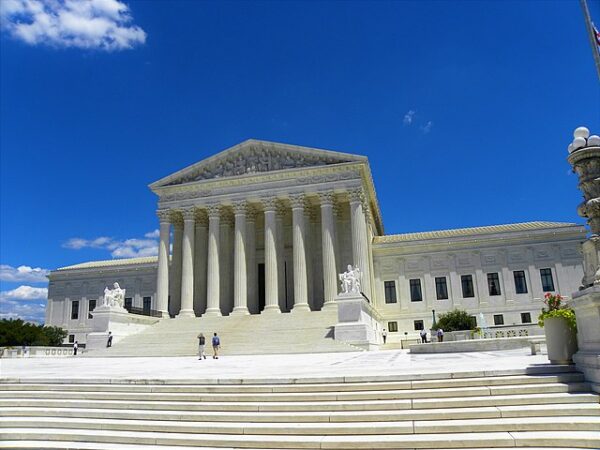

President Donald Trump on Friday sharply criticized the U.S. Supreme Court after its ruling invalidating his sweeping “Liberation Day” tariffs, arguing that a small change in the decision could have saved the country billions.
The Court’s February ruling struck down the emergency tariffs Trump imposed on nearly every country the United States trades with, determining they were unlawful. In a 6-3 decision, the justices concluded that the duties could not stand, triggering a requirement that the federal government refund the revenue already collected under those tariffs.
Trump, reacting to the financial consequences, said the outcome would cost the United States roughly $159 billion in refunds. In a social media post, he argued that a minor adjustment to the ruling—what he described as “one little half sentence”—could have prevented the need to return those funds.
“All they had to do was one little half sentence,” Trump wrote, suggesting that the Court could have allowed the government to keep the money already collected while still requiring changes moving forward. He framed the decision as a missed opportunity that, in his view, would have left the country significantly better off financially.
The president’s frustration reflects broader tensions between the executive branch and the judiciary over the limits of presidential authority, particularly when it comes to economic policy tools like tariffs. While Trump has defended his use of tariffs as a way to protect American interests, the Court’s decision underscores that such powers are ultimately governed by law and constitutional boundaries.
Speaking earlier in the week on CNBC’s “Squawk Box,” Trump described the ruling as “a little setback,” while maintaining that his administration would adjust its approach. He indicated that while the tariffs would need to be implemented differently going forward, the overall objective would remain the same.
The ruling itself was not as narrowly decided as Trump suggested. The Court’s 6-3 split reflected a clear majority, and the justices did not affirm broad unilateral authority for the president to impose tariffs without congressional involvement. Under the U.S. Constitution, the power to levy tariffs rests with Congress, though lawmakers have granted the executive branch limited authority to act in certain emergency situations.
The decision highlights a recurring challenge in Washington: balancing the desire for swift executive action with the constitutional framework that distributes authority among the branches of government. While tariffs can be a powerful economic tool, their use often raises complex legal questions, especially when applied broadly.
At the same time, the financial impact of the ruling has added another layer to the debate. The requirement to refund billions of dollars has fueled criticism from the administration, which argues that the outcome benefits foreign entities that had been subject to the tariffs. Critics, however, point to the importance of adhering to legal limits, even when the policy goals are widely debated.
The episode also serves as a reminder of how economic decisions can intersect with broader global dynamics. Tariffs are often framed as a way to assert national strength, but they can also carry ripple effects across international markets and relationships. When courts step in to define the boundaries of those policies, the result can reshape not only domestic strategy but also the economic landscape beyond U.S. borders.
As the administration looks to move forward, the ruling stands as a clear marker of the limits of executive power—and a signal that even aggressive economic measures must ultimately align with the constitutional structure that governs them.
[READ MORE: Concerns Grow as GOP Rep. Tom Kean Jr. Goes Quiet Amid Tough Midterm Landscape]