

Top U.S. financial leaders quietly convened a high-level meeting this week to address emerging cybersecurity threats tied to rapidly advancing artificial intelligence, underscoring growing concern about how new technology could be weaponized if it falls into the wrong hands.
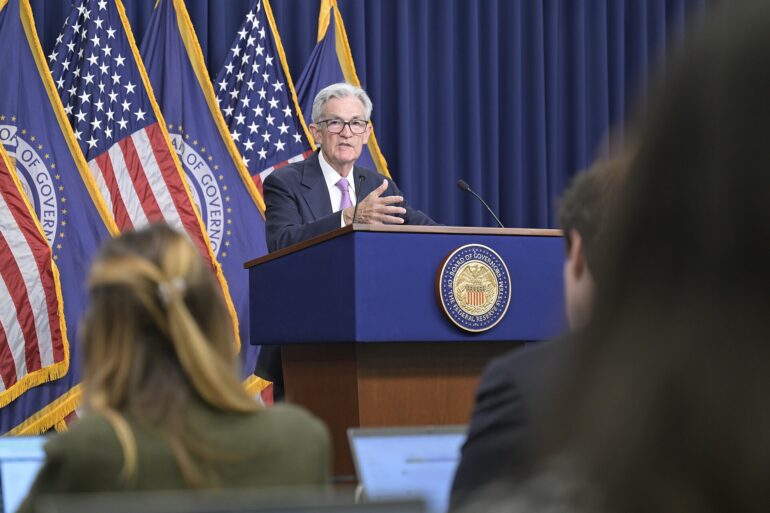
Treasury Secretary Scott Bessent and Federal Reserve Chair Jerome Powell met Tuesday with a group of major bank executives at the Treasury Department, according to multiple sources familiar with the discussions. The meeting came on the heels of a significant announcement from AI firm Anthropic regarding its latest model, Claude Mythos Preview.
Anthropic revealed that it would withhold the model from public release, citing concerns that its capabilities are too advanced and could pose risks if accessed by malicious actors. The decision appears to have triggered immediate attention from policymakers and financial leaders, particularly given the potential vulnerability of banking systems to sophisticated cyber threats.
The meeting included several of the country’s most prominent banking figures, many of whom were already in Washington for a Financial Services Forum event. Among those reported to be in attendance were Bank of America CEO Brian Moynihan, Citigroup CEO Jane Fraser, Morgan Stanley CEO Ted Pick, Goldman Sachs CEO David Solomon, and Wells Fargo CEO Charles Scharf. JPMorgan Chase CEO Jamie Dimon did not attend, according to a source familiar with the matter.
While officials have not publicly commented on the specifics of the meeting, reports indicate the discussion centered on ensuring that financial institutions are prepared to defend against the potential risks posed by advanced AI systems like Mythos. According to Bloomberg and Reuters, the gathering served as both a warning and a call to action for banks to strengthen their cybersecurity defenses.
Anthropic confirmed it has been in communication with U.S. government officials regarding the model, including discussions about both its offensive and defensive capabilities. That dual-use nature—where technology designed for protection can also be adapted for attack—has raised concerns across industries that rely heavily on digital infrastructure.
In response, the company has opted for a more controlled rollout. Claude Mythos Preview will be made available only to a limited group of technology firms, including Apple, CrowdStrike, Amazon Web Services, and Microsoft. These companies, along with more than 40 organizations involved in building or maintaining critical software systems, will use the model primarily for defensive security work.
Anthropic plans to share findings from this effort across the broader industry, an approach aimed at strengthening collective defenses while limiting exposure to potential misuse. The initiative, known as Project Glasswing, was formed after the company assessed the model’s capabilities and determined a cautious path forward was necessary.

The situation highlights a growing reality: as technology becomes more powerful, so too do the risks associated with it. For financial institutions, which serve as the backbone of the economy, even a small vulnerability could carry significant consequences.
At a time when global tensions and conflicts already place pressure on economic stability, the added challenge of securing digital systems against increasingly advanced threats presents yet another layer of complexity. The push to stay ahead of those risks is likely to remain a top priority for both government officials and private industry in the months ahead.