
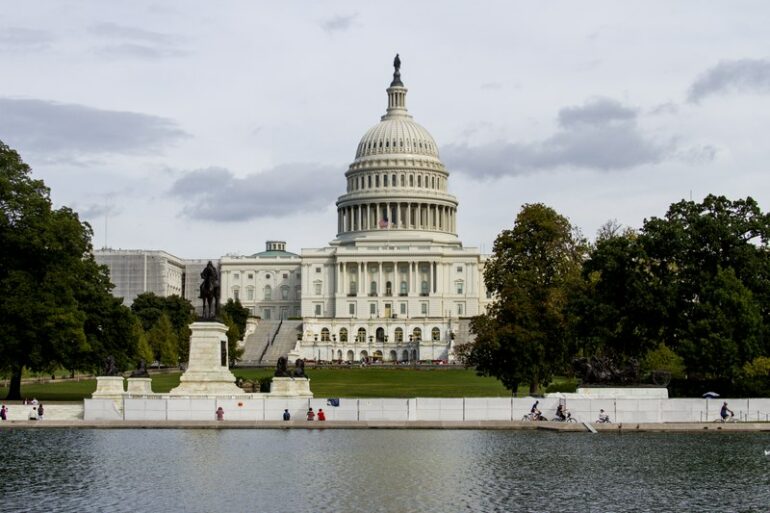

The Republican-led Congress made history in 2025, though not always in ways lawmakers would be eager to tout, as internal divisions, razor-thin margins and heavy reliance on executive action combined to produce a year marked more by procedural fights than by sweeping legislation.
With fewer than 40 bills signed into law as of Dec. 22, the House and Senate recorded the lowest level of legislative output in the first year of a new presidency in modern history, according to data from C-SPAN and Purdue University cited by The Washington Post. The House alone logged just 362 votes during the first session of the two-year Congress, the fewest of any first session this century. That figure represents barely half the number of votes taken in 2017, when Republicans also controlled the chamber during President Donald Trump’s first year in office.
Despite the limited number of bills advancing to the president’s desk, the Senate was anything but idle. Lawmakers there conducted 659 roll-call votes, the most in any odd-numbered year in the 21st century. Nearly six in ten of those votes were dedicated to advancing President Trump’s executive and judicial nominees, underscoring how confirmation battles have increasingly dominated Senate floor time.
Republicans have also leaned heavily on the Congressional Review Act, a legislative tool passed in 1996 that was rarely used for years but has become a favored weapon of recent GOP majorities. In 2025 alone, Republicans targeted 22 regulations issued during the Biden administration, including rules affecting fossil fuel production, gas-powered vehicles and overdraft fees.
Another factor frequently cited in the slowdown has been President Trump’s expanded use of executive orders. In his second term, Trump has signed 225 executive orders, far surpassing the 55 he issued in 2017 and exceeding the total number from his entire first term. Many of those orders have been met with multiple court challenges, shifting major policy disputes from Capitol Hill to the judiciary.
At the same time, Congress is experiencing a significant turnover in membership. A total of 24 Republicans and 19 Democrats have announced plans to retire or seek other offices, putting the House on pace for a record number of departures in a single Congress this century, according to C-SPAN and Purdue University. While Senate retirements are tracking similarly to the 2024 cycle, the House is seeing its highest level of exits in more than a decade, Ballotpedia analysis shows.

For years, the Senate has devoted much of its schedule to confirmations, leaving limited room for legislation beyond must-pass bills. The House has faced comparable slowdowns. Speaker Mike Johnson has at times adjourned the chamber early amid internal GOP disagreements, including a July standoff over whether to force the Justice Department to release files related to the Jeffrey Epstein investigation.
Governing with slim margins has only intensified the challenges. Republicans hold just a few-seat majority in the House and a narrow 53–47 edge in the Senate, leaving little room for error. Those tensions came to a head in late September, when Johnson sent lawmakers home for seven weeks in an effort to pressure Senate Democrats into accepting a short-term funding deal. The move contributed to a record-setting 43-day government shutdown, capping a year defined by stalemate and political brinkmanship.
[READ MORE: Trump Pulls National Guard From Democrat-Run Cities, Warns Troops Will Return When Crime Spikes]