
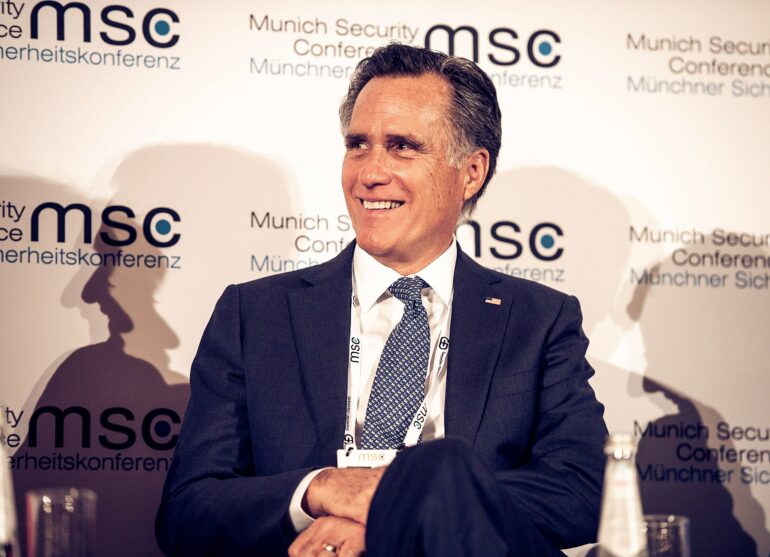

Former Sen. Mitt Romney of Utah is now reportedly urging higher taxes on wealthy Americans, including himself, warning that the country is barreling toward painful Social Security cuts if Washington fails to act.
In a New York Times op-ed published Friday, the onetime Republican presidential nominee argued that looming benefit reductions justify asking rich Americans to pay more, marking a notable departure from long-standing GOP resistance to tax hikes.
Romney framed his argument around projections showing the Social Security Trust Fund running dry in fiscal year 2034. If that happens, he warned, benefits would automatically be cut by about 23 percent.
Revisiting attacks from his 2012 presidential campaign, Romney recalled ads claiming his policies would push “grandma off a cliff,” before arguing that the threat is now real.
“Today, all of us, including our grandmas, truly are headed for a cliff,” Romney wrote, saying the federal government will need trillions of dollars to fill the gap. Against that backdrop, he declared, “it’s time for rich people like me to pay more” in taxes.
Romney acknowledged that he no longer opposes increasing taxes on wealthier Americans and said doing so represents the most realistic source of new revenue. He argued that such changes would also promote fairness and social stability, contending that the current tax code favors the ultra-wealthy in ways that undermine public trust.
He took aim at what are commonly described as tax “loopholes,” saying the term dramatically understates their size and impact. “‘Caverns’ or ‘caves’ would be more fitting,” Romney wrote, arguing that certain provisions allow the wealthy to shield enormous sums from taxation.
Romney highlighted real estate tax rules as a prime example, noting that depreciation provisions tied to the purchase price of buildings were originally designed to stimulate the industry but now primarily benefit multibillionaires. He suggested that eliminating those provisions would raise significant revenue without harming the broader economy.
While emphasizing his belief in free enterprise and upward mobility, Romney said the nation has reached a point where any serious solution to its fiscal challenges will require greater contributions from the wealthiest Americans. “I believe all Americans should be able to strive for financial success,” he wrote, “but we have reached a point where any mix of solutions to our nation’s economic problems is going to involve the wealthiest Americans contributing more.”
Romney conceded that his proposals would have only a modest impact on overall economic growth. Still, he argued they could help avert looming benefit cuts and ease public anger as economic pressures mount.
“It would help us avoid the cliff ahead,” Romney wrote, adding that it could also reduce resentment as unemployed college graduates watch “tax advantaged multibillionaires sailing 300-foot yachts.”
Public opinion appears mixed but leans toward Romney’s position. An October Gallup poll found that 63 percent of Americans support increasing income tax rates on upper-income earners, while 54 percent favor raising revenue through major changes to the federal tax code. Support breaks sharply along party lines, with strong backing from Democrats and independents, but only 38 percent of Republicans in agreement.
A study released in August by the National Bureau of Economic Research found that the 100 wealthiest Americans pay an average tax rate of 22 percent, compared with about 30 percent for the population overall. The study also noted that rates fell after Congress passed President Trump’s One Big Beautiful Bill Act extending the 2017 GOP tax cuts.
Romney’s op-ed underscores a growing divide within Republican ranks over taxes and entitlement reform, as the party grapples with how to address long-term fiscal challenges without abandoning its core economic principles.
[READ MORE: McEnany Urges GOP to Embrace Competitive 2028 Primary Despite Vance Momentum]