
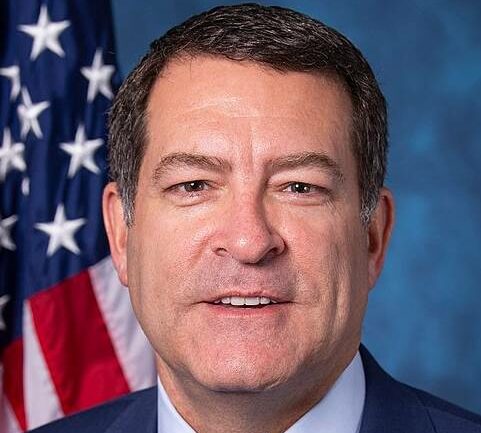

Representative Mark Green of Tennessee, a retired Army surgeon and chair of the House Homeland Security Committee, reportedly announced on Friday that he will resign from Congress effective July 20, leaving a vacancy in a closely divided House.
His departure reduces the Republican majority to 219–212, raising fresh concerns about the party’s ability to maintain its legislative footing ahead of fall budget battles.
Green, who has represented Tennessee’s 7th District since 2019, disclosed in June plans to leave Congress after the passage of the “One Big Beautiful Bill Act,” a sweeping reconciliation package that included his border-security priorities.
In a statement, he said the opportunity to join the private sector—specifically to help the United States compete with the Chinese Communist Party—was “too exciting to pass up,” though he offered few specifics. His announcement came shortly after he cast a decisive vote for the bipartisan fiscal measure.
“It’s with a heavy heart that I say farewell,” Green posted on X, thanking constituents in a district that spans Nashville suburbs, Clarksville, and rural expanses. A West Point graduate and former flight surgeon in Iraq and Afghanistan, he previously announced intentions to retire in early 2024 before reversing course and winning re-election later that year.
Green’s exit threatens to further erode the Republicans’ slim margin in the House, complicating the party’s strategy on pressing issues such as government funding and future reconciliation bills.
With the fiscal year deadline approaching, even a single seat could prove pivotal in votes over government funding and priorities like border control.
The vacancy will be filled via a special election, to be scheduled by Tennessee’s governor within ten days of July 20. General voting is expected approximately 100 days thereafter. While Tennessee’s 7th remains a deeply Republican district—with a Cook PVI of R+10—recent special elections have occasionally swung in favor of Democrats.
Political experts caution that midterm contests and suburban turnout patterns could create unexpected challenges, even in districts long considered safely red.
Green’s resignation also triggers a shuffle within House leadership. As Homeland Security chair, he was a central player in negotiating border policy within the larger budget framework.

His departure will likely prompt competition among Republicans to fill the post and influence upcoming policy priorities.
For now, House Speaker Mike Johnson’s team must navigate a narrower majority and the logistics of the special election.
The outcome in Tennessee’s 7th could serve as an early barometer of 2026 dynamics—but for Green, the next chapter appears to lie outside Capitol Hill, in a private-sector role he hopes will reinforce America’s industrial and strategic posture.
[READ MORE: Iran Officially Cuts Off IAEA From Monitoring Nuclear Program]