
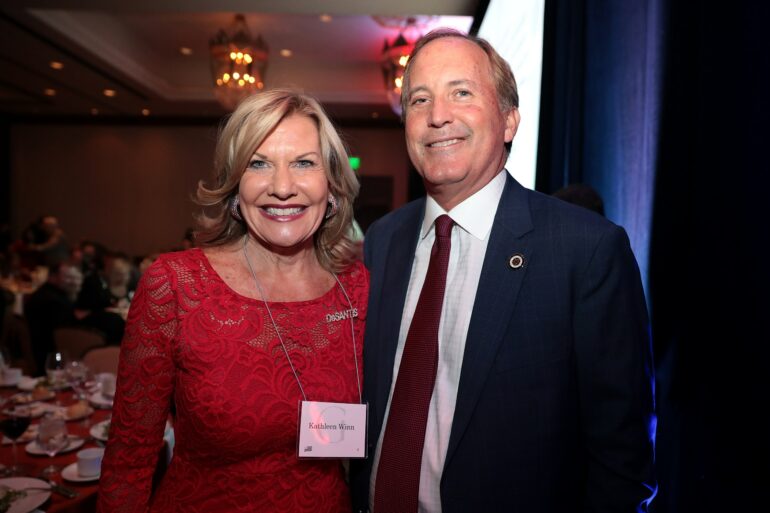

Texas Attorney General Ken Paxton sued OpenAI and its CEO, Sam Altman, on Friday. He accuses the artificial intelligence company of misleading consumers about the safety of ChatGPT and failing to warn them about the risks of its technology.
“With the rapid advancement of AI technology, OpenAI has the responsibility to protect users and warn them of the many dangers of its platform,” Paxton said in a statement Friday.
The 67-page lawsuit was filed in Collin County District Court. It relies on the Texas Deceptive Trade Practices Act and the Securing Children Online Through Parental Empowerment Act, known as the SCOPE Act, which deals with children’s safety online. The suit names OpenAI Global, LLC and affiliated entities along with Altman personally.
Paxton argues that while OpenAI markets its products as “trustworthy, reliable, and safe,” ChatGPT is prone to errors and “hallucinations,” in which AI tools generate fabricated results. He says that unreliability is dangerous and points to users who relied on incorrect or misleading health care information from the chatbot.
The complaint also cites reports of ChatGPT giving bad medical and legal advice, encouraging dangerous behavior and fostering emotional dependency, particularly among minors. Paxton’s office cites at least eight instances in which people who committed violent acts had consulted ChatGPT.
The lawsuit alleges that ChatGPT lacks adequate age verification and parental oversight. It claims children can use the chatbot and share sensitive personal information without sufficient protection, and that the company designed ChatGPT to simulate human compassion while collecting users’ personal data.
Paxton further argues that the company cannot fully control its own technology. He points to recent incidents in which AI agents hacked into other organizations or acted unexpectedly, with particular focus on a July 2026 security breach at Hugging Face.
The suit takes aim at OpenAI’s motives. “This litany of harms is driven by the company’s insatiable quest to win the AI arms race and amass large fortunes, despite knowing the dangers of ChatGPT,” it states.
Texas is seeking more than $1 million in monetary relief and a broad injunction. The requested order would require OpenAI to block minors’ access to its product and would bar the company from releasing new ChatGPT models in Texas without approval from a court-appointed independent evaluator.

The case is the latest in a string of actions Paxton has taken against Big Tech. In the last year, he has sued or settled with Meta, TikTok, Snapchat and Roblox under the state’s consumer protection laws, alleging they lacked sufficient guardrails to protect Texans, especially children. As with much of his high-profile tech litigation, the state is represented by outside counsel, including Tony Buzbee, who defended Paxton during his 2023 impeachment proceedings.
Texas is not alone. Florida sued OpenAI in June, alleging it promoted a product it knew could harm consumers. Arkansas, Arizona, Idaho, Montana, Iowa, Kansas, West Virginia and Nebraska have also filed suits claiming OpenAI misled users about the chatbot’s safety.
The lawsuit comes as Paxton runs for the U.S. Senate against Democrat James Talarico. Campaign finance filings released a week earlier showed that Elon Musk, a major OpenAI competitor and rival of Altman, spent nearly $200 million on ads supporting Paxton’s campaign.
While President Trump has strongly embraced AI, Paxton and several other Republican candidates have put some distance between themselves and the technology, most notably on data centers.