
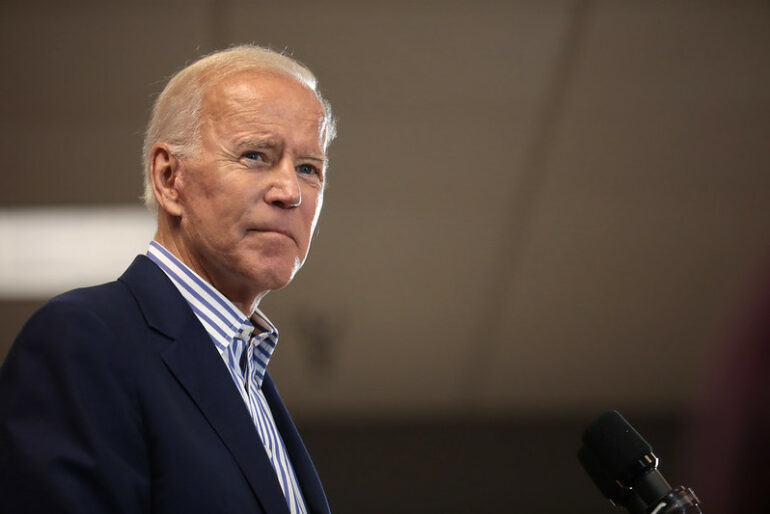

Former President Joe Biden suffered a legal setback Monday after a divided federal appeals court rejected his effort to prevent the release of audio recordings and transcripts from interviews conducted with his longtime ghostwriter, materials that later became central to Special Counsel Robert Hur’s investigation into Biden’s handling of classified documents.
The ruling determined that Biden’s privacy concerns did not outweigh what the court described as the substantial public interest in the records. However, the court temporarily paused the effect of its decision until Aug. 3, giving the former president time to consider pursuing additional legal action before the recordings and transcripts can be released.
The interviews were conducted after Biden’s tenure as vice president while he was working with author Mark Zwonitzer on his 2017 memoir, “Promise Me Dad.” During the writing process, Biden met with Zwonitzer multiple times, and recordings of those conversations were eventually obtained by Hur’s office as part of its investigation into Biden’s retention of classified documents.
Hur’s February 2024 report drew widespread attention after it described Biden as displaying “diminished faculties and faulty memory.” The report characterized the recorded conversations as “painfully slow,” stating that Biden struggled to recall significant events.
Although Hur ultimately declined to bring criminal charges against Biden, the special counsel explained that one factor influencing his decision was his belief that Biden would likely present himself before a jury as “a sympathetic, well-meaning, elderly man with a poor memory.”
The legal battle over the interview materials began in March 2024, when The Heritage Foundation filed a lawsuit against the Justice Department under the Freedom of Information Act, seeking access to both the recordings and the transcripts.
Biden’s legal team argued that the conversations with Zwonitzer were private discussions intended solely to assist with the writing of his memoir and were never meant for public release.
The appeals court majority rejected that argument, concluding that once the recordings came into the possession of the special counsel during the criminal investigation, they became subject to the disclosure requirements of the Freedom of Information Act.
The court also determined that Biden had failed to demonstrate he would suffer irreparable harm if the materials were released.
“We conclude that any remaining incursion on personal privacy from disclosure of the now-redacted materials likely does not outweigh the public interest in disclosure,” the majority opinion stated.
The opinion was authored by D.C. Circuit Chief Judge Sri Srinivasan, who was appointed by former President Barack Obama, and Judge Gregory Katsas, who was appointed by President Donald Trump.
Judge Florence Pan, the lone Biden appointee on the three-judge panel, dissented. She argued that Biden had established a substantial privacy interest in the recordings and transcripts, noting that the conversations occurred inside Biden’s home and that the government obtained the recordings during a criminal investigation that ultimately did not result in an indictment.
Portions of Biden’s interviews with Hur were previously released in transcript form in March 2024, drawing significant attention after they showed the then-president struggling to recall important personal and historical events.
One exchange included Biden attempting to remember when his son Beau died.
“What month did Beau die? Oh, God, May 30 —” Biden said, according to the transcript.
White House lawyer Rachel Cotton and another individual reminded him that Beau Biden died in 2015.
“Was it 2015 he had died?” Biden asked.
“It was May of 2015,” he was told.
The transcript’s release also contradicted Biden’s earlier public characterization of the interview. Biden had claimed that Hur improperly raised the subject of his son’s death during questioning, but the transcript reflected that Biden himself introduced the topic during the interview.
[READ MORE: Pentagon Identifies Two U.S. Soldiers Killed in Iranian Attack on Jordan Base]