
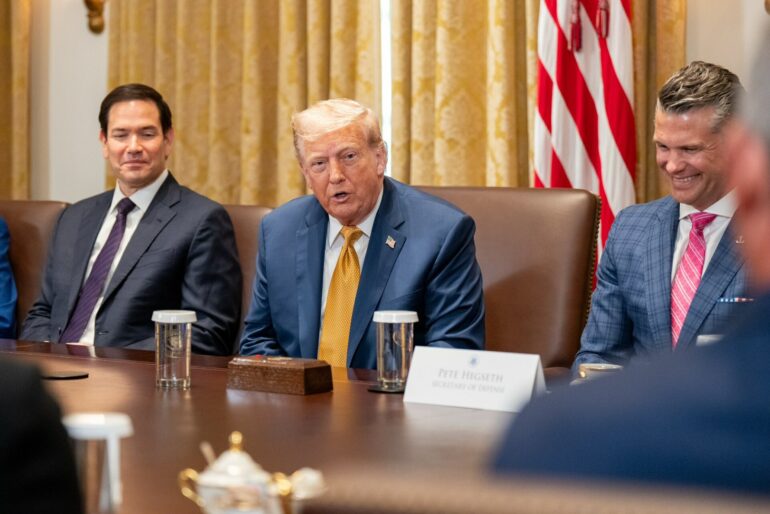

President Donald Trump is reportedly now drawing a sharp contrast between longtime NATO allies and Japan as the United States grapples with rising tensions in the Strait of Hormuz, a critical global energy chokepoint now at the center of the ongoing conflict with Iran.
Fox News anchor Martha MacCallum reported Friday that she spoke directly with the president by phone, where he expressed frustration with NATO countries he believes have not done enough to respond to Iran’s attacks on shipping routes in the region. According to MacCallum, Trump emphasized that restoring stability in the strait would not require complex solutions, but simply “numbers” — a reference to deploying sufficient forces to secure the area.
Trump also suggested that Iran’s capabilities have been significantly diminished, stating that the country “has nothing left,” even as tensions continue to disrupt global energy flows and contribute to rising costs.
In contrast to his criticism of NATO, the president spoke favorably about Japan, describing it as a more reliable partner under the current circumstances. When asked whether Japan had offered military support, Trump acknowledged the country’s constitutional limitations but expressed confidence in its willingness to stand with the United States if necessary.
“Japan is better ally than NATO,” Trump said, according to MacCallum’s account of the conversation.
The remarks come just one day after Trump met with Japanese Prime Minister Sanae Takaichi at the White House, where discussions included the strategic importance of keeping the Strait of Hormuz open. The narrow waterway is a vital artery for global oil shipments, and disruptions there have already sent ripple effects through energy markets.
Fox News anchor John Roberts highlighted the urgency of the situation during Friday’s America Reports, noting that concerns over the strait have intensified as gas prices climb sharply. He pointed out that maintaining open passage through the waterway has become a top priority, not just for the United States but for countries heavily dependent on its flow of oil.
Trump echoed that point in remarks aired during the segment, emphasizing Japan’s reliance on the strait. “In the case of Japan, I hear they get more than 90% of their oil through the strait,” he said, suggesting that such dependence provides strong incentive for Tokyo to take an active role.
Japan, along with NATO nations, has already joined a joint statement condemning Iran’s attacks on tankers and expressing readiness to support efforts to ensure safe passage. Still, Trump’s comments suggest he sees a gap between statements of support and meaningful action.
Roberts noted that the president had taken to Truth Social earlier in the day to criticize NATO allies more forcefully, reportedly calling them cowards and warning that their response would not be forgotten. The remarks signal a growing impatience from the administration as it seeks greater international involvement in securing the region.
At the heart of the debate is a familiar challenge: how to balance global security commitments with the expectations placed on allies. While the administration appears to be pressing for more visible support, the broader situation underscores how quickly regional conflict can draw in international partners—and strain those relationships in the process.
As energy prices rise and the stakes in the Strait of Hormuz continue to climb, the pressure is mounting not just on adversaries, but on allies as well. Whether that pressure leads to greater cooperation or deeper divisions remains an open question, one that will likely shape the next phase of a conflict already carrying significant global consequences.
[READ MORE: Boebert Draws Line on Iran War Funding as Costs Mount and Frustration Grows]