
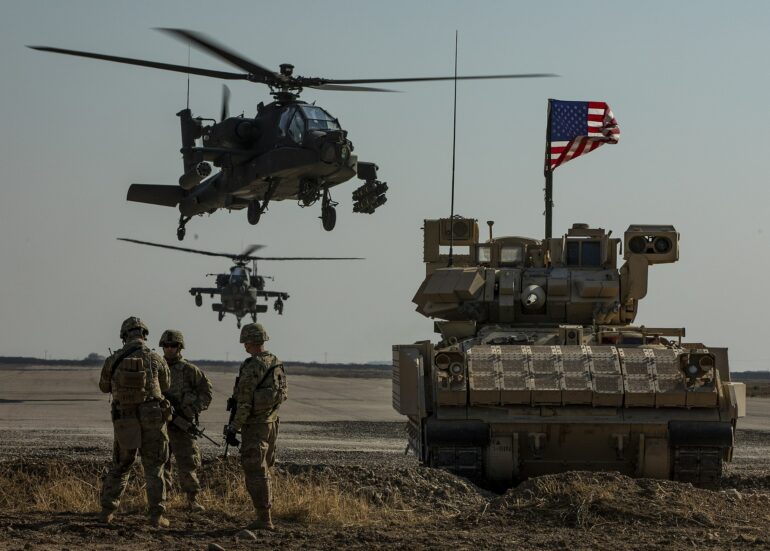

The Pentagon is reportedly ramping up preparations for the possible deployment of U.S. ground troops in Iran, even as President Donald Trump signals that no final decision has been made—highlighting the uncertainty surrounding a conflict that continues to evolve by the day.
According to a CBS News report, senior military commanders have submitted specific requests aimed at laying the groundwork for a potential ground operation. The preparations are designed to ensure that the president has what officials describe as “maximum optionality” as he considers how far to expand U.S. involvement in the ongoing U.S.-Israel-led campaign against Iran.
Sources familiar with the discussions told CBS News that Trump has been deliberating whether to position American ground forces in the region. However, the report noted that it remains unclear under what circumstances such a deployment would be authorized, leaving open questions about both timing and scope.
The White House sought to temper speculation, emphasizing that planning does not equal action. Press secretary Karoline Leavitt said it is standard practice for the Pentagon to prepare for a range of scenarios, stressing that these steps are about readiness, not commitment.
“It’s the job of the Pentagon to make preparations in order to give the Commander in Chief maximum optionality,” Leavitt said. She added that the president has not made a decision and reiterated Trump’s recent statement that he is not planning to send ground troops “at this time.”
Still, other reports suggest the administration is actively exploring options that could require a larger military footprint. Axios reported Friday that officials are considering plans to occupy or blockade Iran’s Kharg Island as a way to pressure Tehran to reopen the Strait of Hormuz. Such an operation, if approved, would likely necessitate additional troops on the ground.
Military movements already underway point to a growing U.S. presence in the region. According to Axios, three separate Marine units are currently en route, with discussions ongoing about sending even more forces. These developments come on top of the existing deployment, signaling a steady buildup even as public messaging remains cautious.
Trump himself has offered mixed signals on the issue. Speaking to reporters Thursday, he said he was not “putting troops anywhere,” but quickly added that if he were, he “certainly wouldn’t tell” the press—leaving room for interpretation.
Earlier this month, shortly after the launch of Operation Epic Fury, the president also took a different tone, suggesting he was not bound by the traditional reluctance to commit ground forces. “I don’t have the yips with respect to boots on the ground,” Trump said at the time, noting that many presidents have made similar assurances only to change course later.
The contrast between preparation and public statements reflects a broader tension familiar in moments like this: the desire to keep options open while avoiding a deeper entanglement. Military planning often runs ahead of political decisions, but once forces are in place, the pressure to use them can grow.
For now, the administration maintains that no final call has been made. Yet with preparations intensifying and troop movements already underway, the possibility of a deeper U.S. role in the conflict remains firmly on the table—raising difficult questions about how far the mission could expand, and what the long-term costs might be if it does.
[READ MORE: Boebert Draws Line on Iran War Funding as Costs Mount and Frustration Grows]