
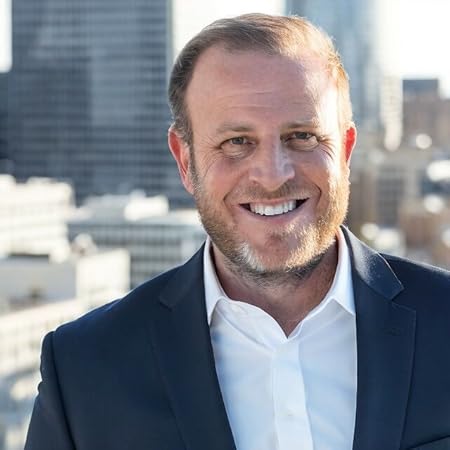

President Donald Trump’s nominee for a senior State Department position withdrew his candidacy Tuesday after facing growing resistance on Capitol Hill that threatened to block his confirmation.
Jeremy Carl, who had been nominated to serve as assistant secretary of state for international organizations, announced he would step aside following weeks of intense scrutiny over past remarks related to white identity and American culture. The controversy drew sharp criticism from Democrats and placed pressure on Republican lawmakers whose support would have been necessary to advance his nomination.
Earlier Tuesday, Senate Minority Leader Chuck Schumer accused Carl of holding what he described as “a long history of racist, white supremacist, and antisemitic views,” arguing that such beliefs made him unfit for a senior diplomatic role at the State Department. Carl has denied those characterizations and maintained that his statements have been widely misunderstood.
In a statement posted to social media, Carl said he had decided to withdraw from consideration after recognizing the political reality surrounding the confirmation process.
“I wanted to announce that I am withdrawing my nomination for consideration as Assistant Secretary of State for International Organization Affairs,” Carl wrote. He expressed gratitude to President Trump for both nominating and renominating him to the post and thanked Secretary of State Marco Rubio and his team for their continued support during what he described as a lengthy and demanding process.
Carl noted that while backing from the president and the secretary of state was significant, it ultimately was not enough to secure confirmation.
“Unfortunately, for senior positions such as this one, the support of the President and Secretary of State is very important but not sufficient,” he wrote. “We also needed the unanimous support of every GOP Senator on the Committee on Foreign Relations, given the unanimous opposition of Senate Democrats to my candidacy, and unfortunately, at this time this unanimous support was not forthcoming.”
The nomination battle highlighted the increasingly contentious atmosphere surrounding foreign policy appointments in Washington, where ideological disputes often overshadow debates about the responsibilities of the role itself.
Carl said critics had distorted his views, particularly remarks in which he referenced “white culture.” According to Carl, the term was not intended to exclude Americans of any background but instead referred to what he described as a shared civic culture rooted in traditions common across the country before the 1965 Hart-Celler Immigration Act.
He argued that this civic culture is something Americans of all backgrounds can participate in and help sustain.
The controversy came to a head during Carl’s Senate confirmation hearing in February, when lawmakers questioned him about earlier statements warning that “white culture” was being erased in the United States.
Democratic Sen. Chris Murphy of Connecticut pressed Carl directly on those remarks, asking him to explain what values he believed were disappearing and how he defined the cultural changes he had referenced.

Carl responded that the question mischaracterized his views and reiterated that his concern centered on preserving a shared national culture rather than promoting racial identity.
At the same time, Carl fired back at Schumer following the minority leader’s criticism. In a post on X, he accused the New York Democrat of condemning such rhetoric selectively.
Carl argued that Schumer only raises accusations of racism or antisemitism when it can be used “as a cudgel to beat Republicans,” while failing to denounce controversial remarks from members of his own party. He pointed specifically to comments from Texas Democrat House leader Gene Wu and Democratic Congresswoman and Senate candidate Jasmine Crockett.
Carl’s withdrawal brings an abrupt end to a nomination fight that underscored the deep partisan divide in Washington—particularly when it comes to foreign policy positions tied to international organizations and global diplomacy.
For now, the role remains unfilled as the administration considers its next move in navigating both the Senate confirmation process and the broader debate over America’s role on the world stage.