
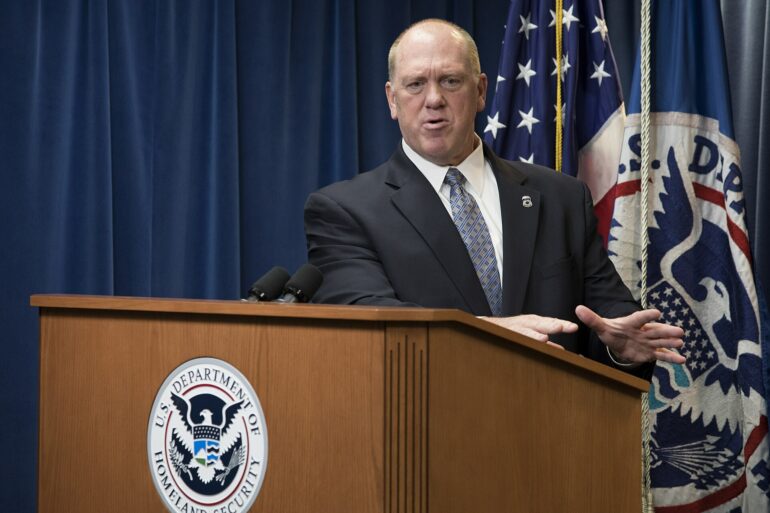

Border czar Tom Homan said Thursday that federal immigration agencies are preparing to scale back their footprint in Minnesota after what he described as productive meetings with state and local leaders, signaling a shift toward cooperation that he said will make enforcement safer, more efficient, and less disruptive.
Speaking at a Minneapolis press conference just days after taking over the Trump administration’s immigration operation in the state, Homan said staff from Customs and Border Protection and Immigration and Customs Enforcement are actively developing a drawdown plan. The move follows President Donald Trump’s decision to reassign Border Patrol commander Gregory Bovino and put Homan in charge after the fatal shooting of VA nurse Alex Pretti over the weekend.
Homan told reporters that discussions with Minnesota officials and law enforcement have focused on reaching practical agreements that would allow federal agents to do their jobs with fewer personnel on the ground. Chief among those agreements is cooperation to arrest individuals sought by ICE when they are released from local jails, rather than attempting arrests in public settings.
“When we have agreements, it takes less law enforcement agents to do the job,” Homan said. He argued that jail-based cooperation allows agents to operate “by the book,” while improving safety for officers and the public alike.
Homan contrasted that approach with what he described as the current reality, where hostility toward federal agents has forced ICE to deploy large teams to conduct arrests in the community. He said inflammatory rhetoric and physical attacks on agents have made routine operations far more complicated.
“When that happens, we have to send in a security team behind the arrest team,” Homan explained. “What could have been done by one person in the safety of the jail now, we got 15 to 16 people out there doing.”
He acknowledged that the heavy federal presence has created tension and stress in Minnesota communities, but said the situation is the result of resistance to cooperation rather than the intent of the operation itself.
“I know that causes stress in the community,” Homan said. “That’s why these agreements mean less agents on the street.”
Homan framed the planned reduction not as a retreat, but as a common-sense adjustment made possible by cooperation. He emphasized that when local and state officials work with federal authorities, ICE and CBP can focus on targeted enforcement without the need for large-scale deployments.

“This is common sense cooperation that allows us to draw down on the number of people we have here,” he said. “Yes, I said it — draw down the number of people here.”
Homan said the drawdown would be guided by operational needs, including the number of remaining enforcement targets. He confirmed that teams from both CBP and ICE are already evaluating how many agents can be pulled back without compromising enforcement.
“As a matter of fact, I have staff from CBP and from ICE working on a drawdown plan and what that looks like,” Homan said. “What does that look like based on how many targets we have left.”
The announcement marked a notable change in tone from earlier days of the operation, as the administration seeks to de-escalate tensions following Pretti’s death while maintaining its broader immigration enforcement goals. Homan made clear that cooperation, not confrontation, is the fastest way to reduce the federal presence in Minnesota — and restore a more orderly approach to enforcement.