
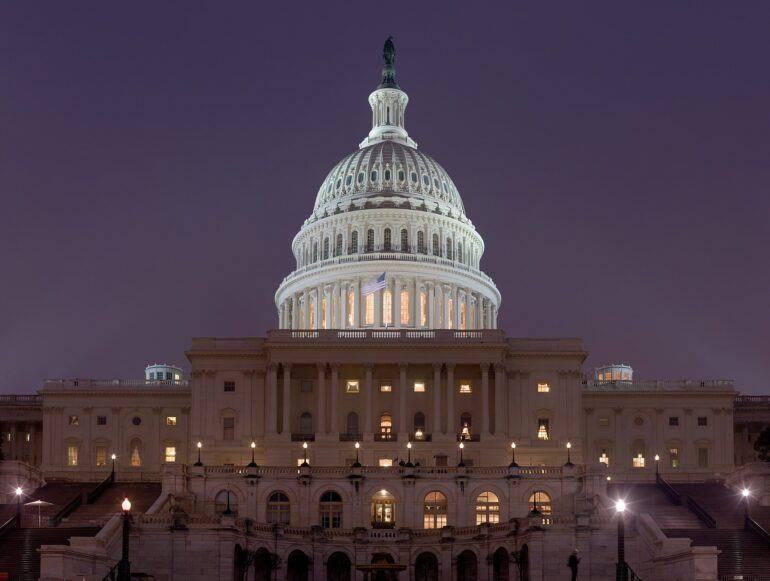

The Senate voted 51–50 on Wednesday to table a resolution that would have blocked President Donald Trump from using future military force against Venezuela, delivering a narrow but decisive victory for the White House and Republican leadership pushing back against what they described as another attempt to undercut the president’s authority.
The vote came after intense lobbying from Trump, as several Republican senators who had previously broken with him reversed course. Republican Sens. Josh Hawley of Missouri and Todd Young of Indiana, who had opposed Trump on Venezuela earlier this month, flipped their votes following discussions with administration officials and the president himself. Vice President JD Vance cast the tie-breaking vote to adopt a GOP point of order, effectively killing further consideration of the war powers resolution.
Had Republicans failed to block the measure, Trump could have faced yet another Senate rebuke after Hawley, Young, and three other Republicans voted to advance the resolution last week. That earlier vote had signaled internal GOP tensions over foreign policy and war powers, but Wednesday’s outcome underscored the administration’s success in consolidating support.
Hawley, who has frequently expressed skepticism toward regime change efforts, said he reviewed classified information outlining the administration’s rationale for potential military action in Venezuela ahead of the vote. He also told reporters that he spoke with Secretary of State Marco Rubio, who assured him the administration would seek congressional authorization before deploying troops. Young echoed that explanation, saying that after extensive conversations with Trump administration officials, he received a similar commitment that Congress would be consulted before any future use of force.
Despite Trump sharply criticizing dissenting Republicans following the earlier procedural vote, three GOP senators—Susan Collins of Maine, Lisa Murkowski of Alaska, and Rand Paul of Kentucky—continued to support advancing the war powers resolution. Trump wrote on Truth Social on Jan. 8 that the five Republicans who broke with him that day “should never be elected to office again.” Murkowski later said Trump did not persuade her to change her position, stating plainly that she was not reconsidering her vote.
All Democrats voted against tabling the resolution, lining up behind efforts to impose congressional oversight on any future military action in Venezuela. Senate Minority Leader Chuck Schumer, Democratic Sen. Tim Kaine of Virginia, and Paul were among the leading proponents of forcing limits on Trump’s authority.
Republican leadership argued the resolution was unnecessary and procedurally flawed. They moved to strip it of its privileged status, contending that because there is no active fighting in Venezuela and no U.S. troops on the ground, the war powers measure was moot. Rubio told senators in a letter that there are currently no U.S. service members in Venezuela.
Republicans also pointed to recent precedent, noting that Democrats voted in 2024 to table a Republican resolution aimed at blocking the Biden administration from constructing a humanitarian pier in Gaza.

Senate Majority Leader John Thune blasted the effort as another case of what he called “anti-Trump hysteria,” arguing that Democrats were applying standards to Trump they never imposed on their own presidents. Thune contrasted the current situation with past Democratic administrations that carried out far larger military operations overseas without similar resistance.
The failed resolution follows months of asset buildup around Venezuela that culminated in the capture of President Nicolás Maduro on Jan. 3. The Senate had already rejected a similar war powers measure in November, with only Paul and Murkowski joining Democrats, reinforcing Republicans’ broader resistance to limiting Trump’s foreign policy authority.